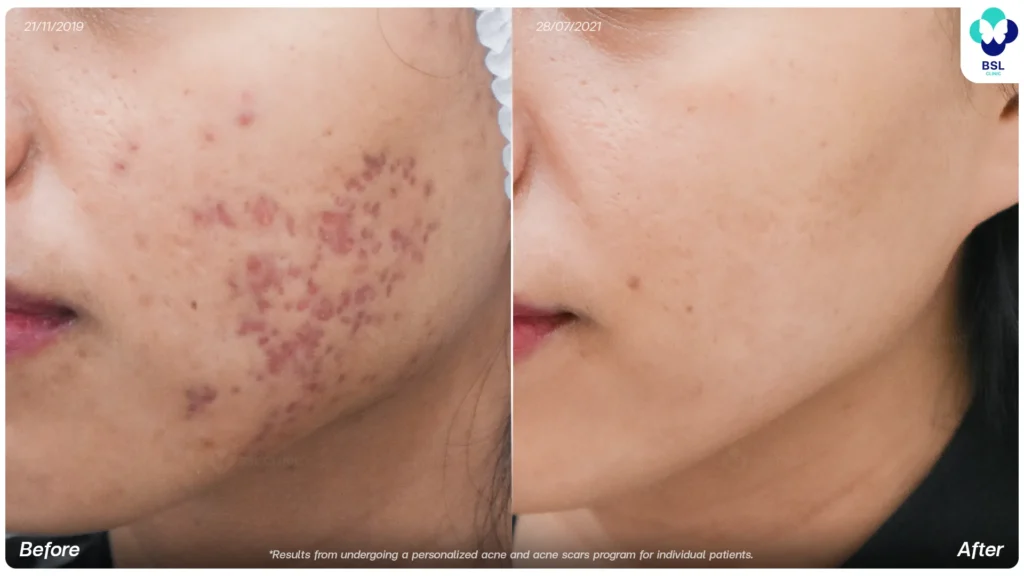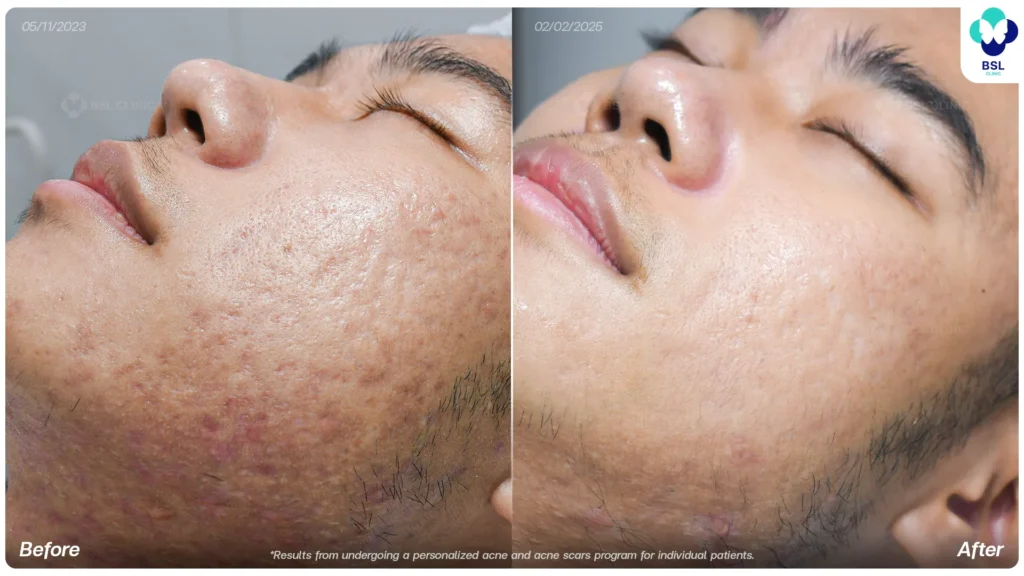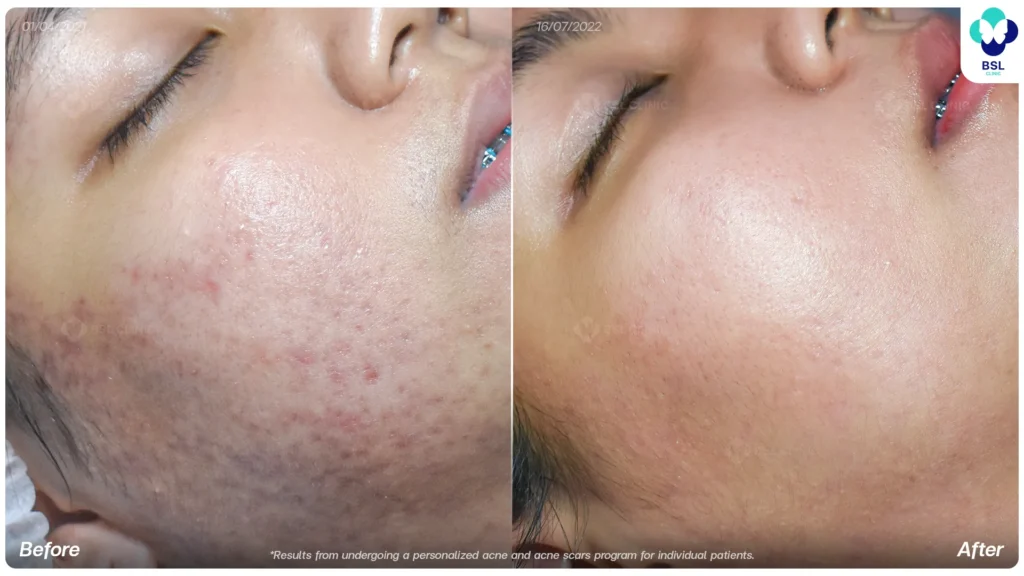

Do Acne Scars Go Away? Treatments That Actually Work
acne scars

Acne Scar Treatment

The right treatment starts with understanding your scar.

Most people ask, “Which acne scar treatment should I choose?”

A better place to start is understanding your scars.

Acne scars can vary in shape, depth, and location—and many people have more than one type.
That doesn't always mean more treatment. It means understanding what matters most, where to start, and which treatment options may be appropriate for your skin.


Summary

Successful acne scar treatment begins with understanding your scar type, not simply choosing the latest technology. With the right combination of treatments, acne scars can often become smoother, shallower, and less noticeable over time.

At BSL Clinic, our doctors personalize each treatment plan based on your scar type, skin condition, and treatment goals, with the aim of improving scar depth, skin texture, and overall skin quality over time.

What are Acne Scars? and Why do Acne Scars form?

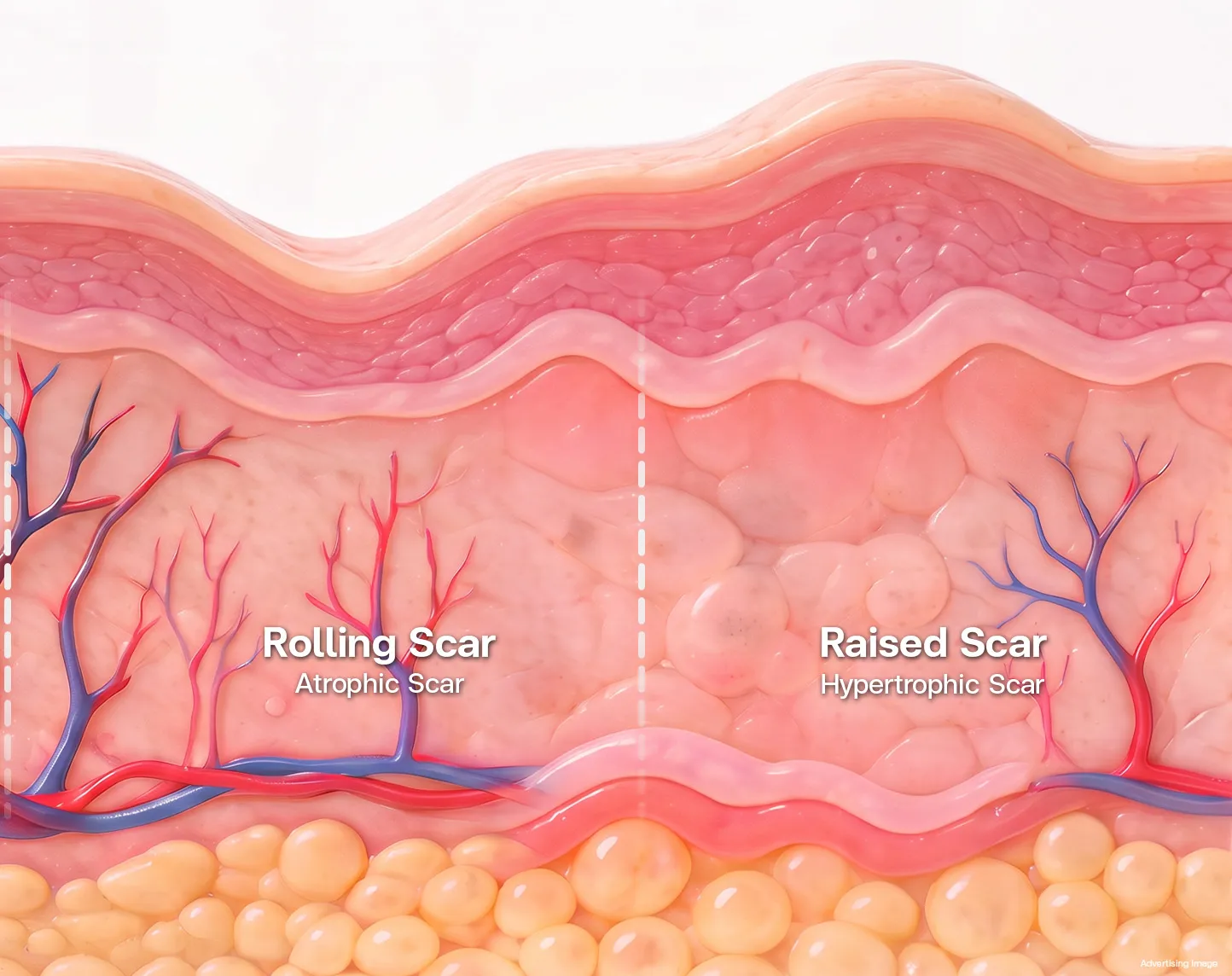
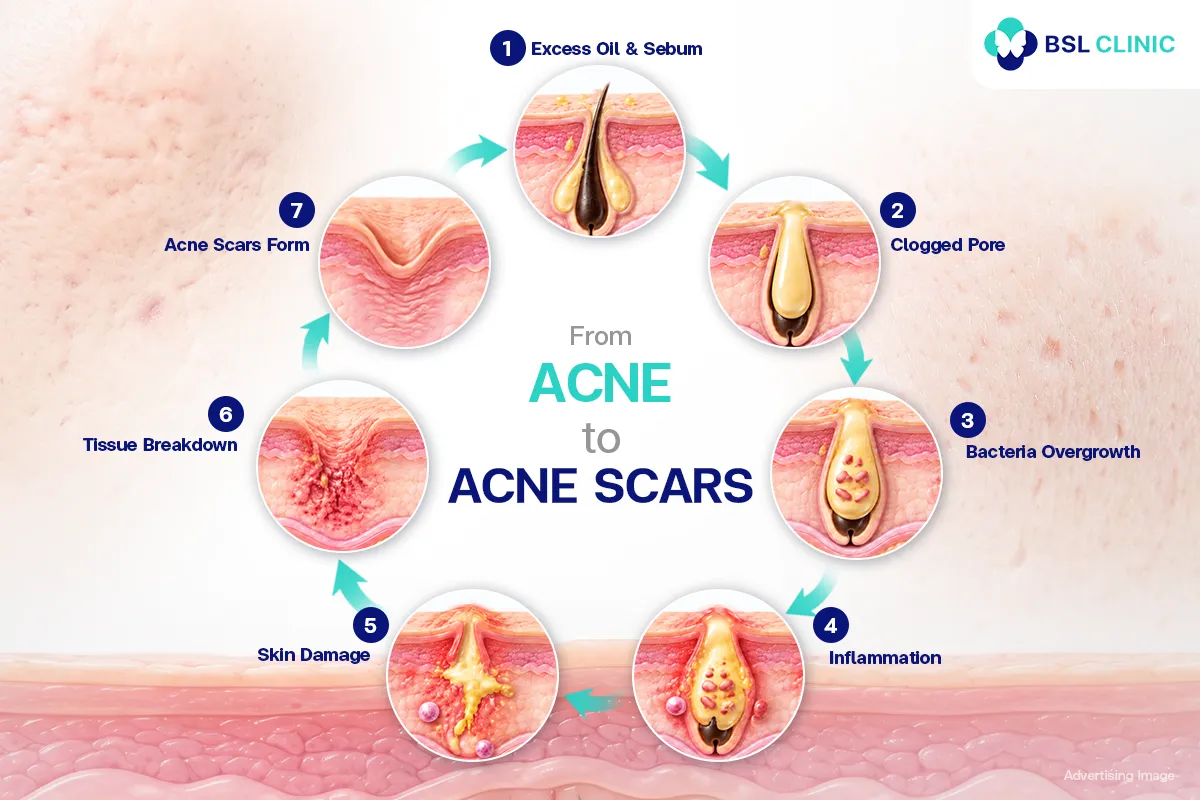
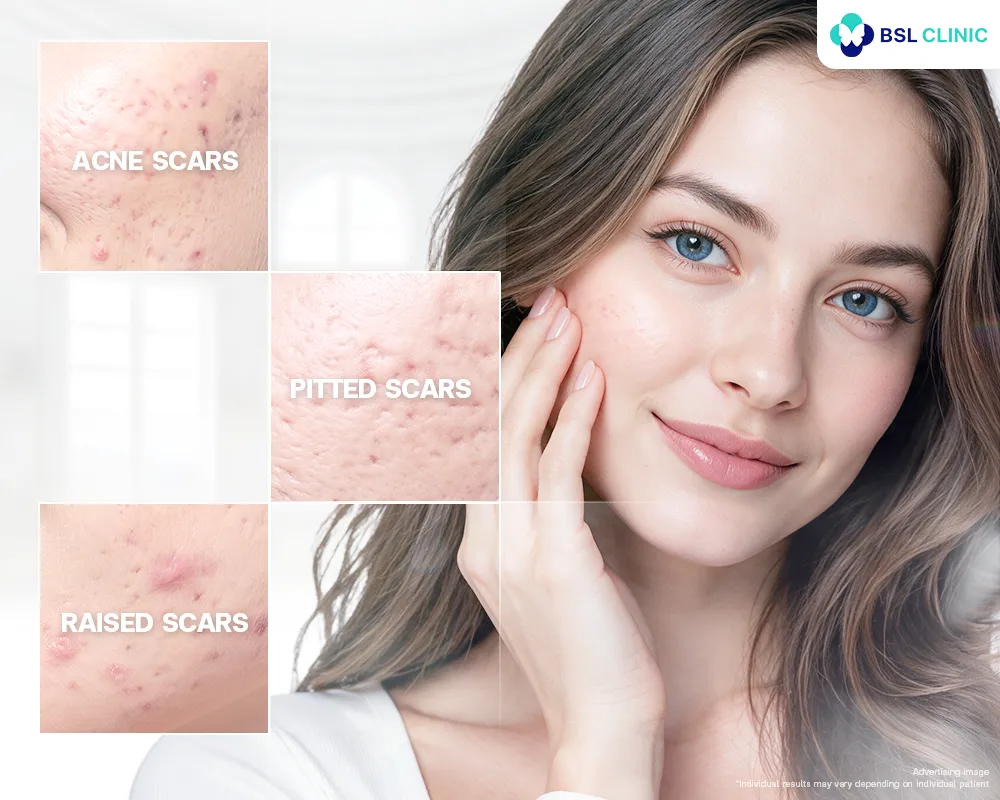
Acne may be gone, but the scars can remain for long. Unlike temporary acne marks, acne scars develop when inflammation damages the deeper layers of the skin and the body cannot completely repair the lost collagen. As a result, the skin may become depressed (atrophic scars) or raised (hypertrophic scars or keloids). The risk of scarring increases when inflammatory acne is left untreated or pimples are picked and squeezed.

Beyond changing skin texture, acne scars can also affect confidence and quality of life. The good news is that not all scars are the same—and understanding your scar type is the first step toward choosing the right treatment plan. Before exploring treatment options, let’s first look at the difference between acne marks and acne scars.

Acne Marks vs Acne Scars: What’s the difference?

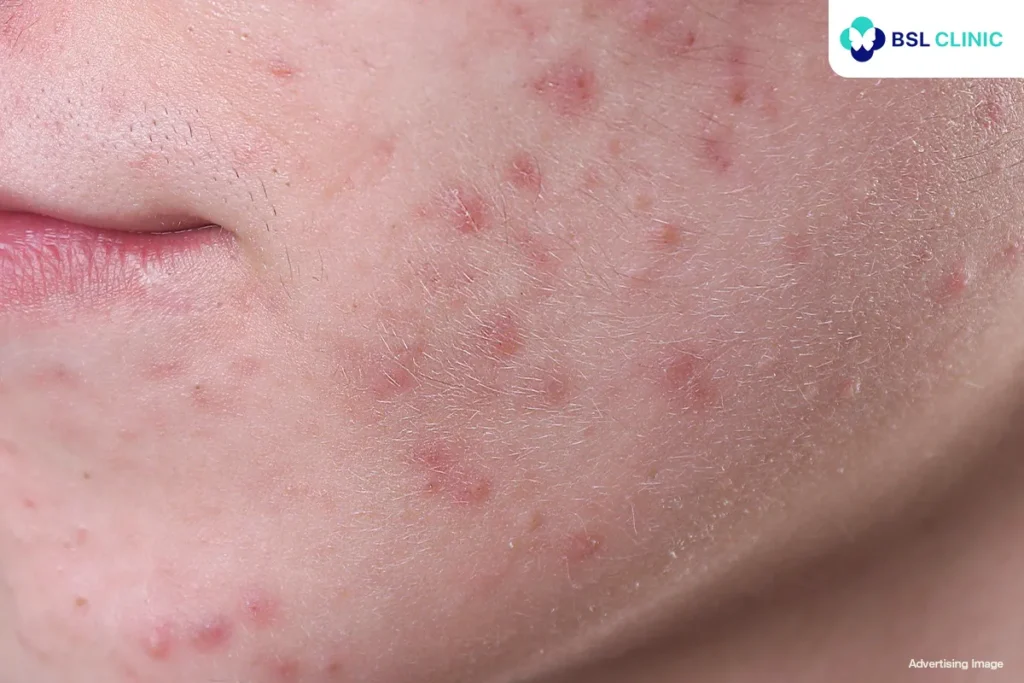
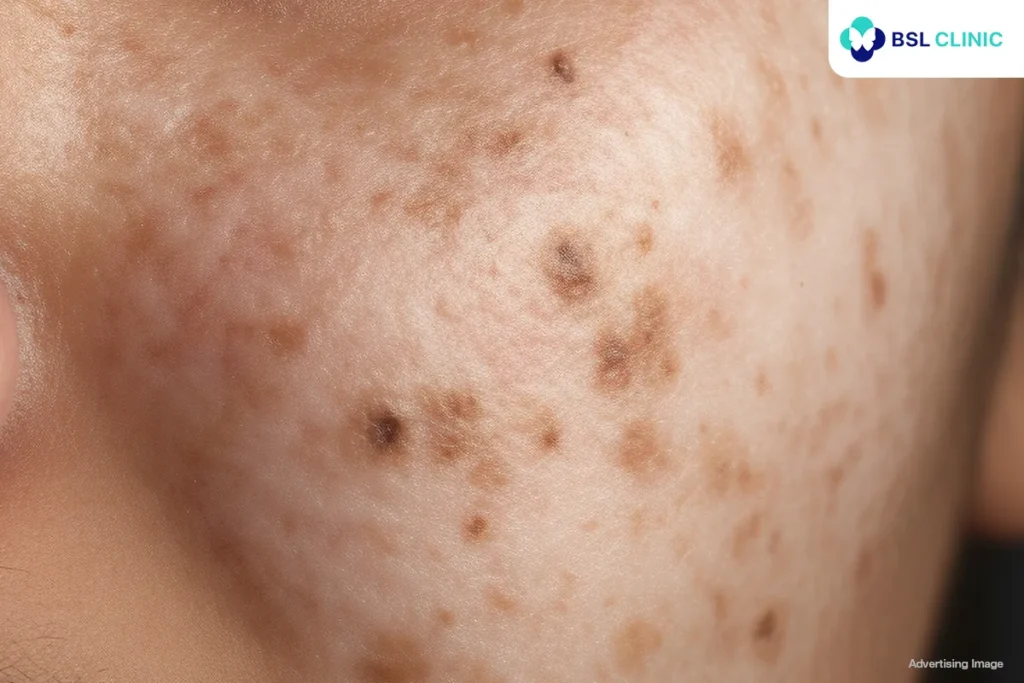
Many people use the terms acne marks and acne scars interchangeably, but they are different skin concerns with different causes and treatment approaches. The simplest way to tell them apart is that acne marks affect skin color, while acne scars affect skin texture. Understanding the difference is the first step toward choosing the right treatment.

Feature
Red Acne Marks (PIE)
Dark Acne Marks (PIH)
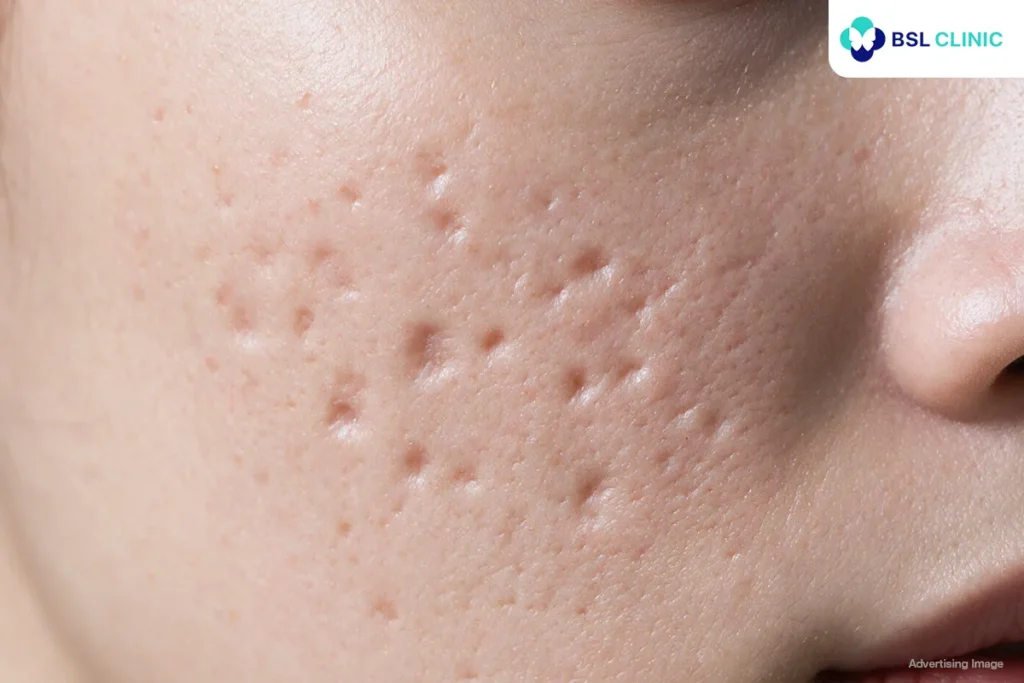
Acne Scars
Appearance
Pink or red marks after inflammatory acne
Red Acne Marks (PIE)
Brown or dark spots after acne heals
Dark Acne Marks (PIH)
Pitted scars or raised scars
Acne Scars
Cause
Dilated or damaged blood vessels
Excess melanin produced after inflammation
Collagen damage in the deeper layers of the skin
Affects
Skin color
Skin pigmentation
Skin texture
Long-Term Effect
Usually No
Usually No
Usually Yes
Natural Fading
Often fades over time
Usually requires professional treatment
Red Acne Marks (PIE)

Appearance: Pink or red marks after inflammatory acne

Cause: Dilated or damaged blood vessels

Affects: Skin color

Long-Term Effect: Usually No

Natural Fading: Often fades over time

Dark Acne Marks (PIH)

Appearance: Brown or dark spots after acne heals

Cause: Excess melanin produced after inflammation

Affects: Skin pigmentation

Long-Term Effect: Usually No

Natural Fading: Often fades over time

Acne Scars

Appearance: Pitted scars or raised scars

Cause: Collagen damage in the deeper layers of the skin

Affects: Skin texture

Long-Term Effect: Usually Yes

Natural Fading: Usually requires professional treatment

Although acne marks often improve with time, true acne scars usually require professional treatment because they involve permanent structural changes beneath the skin. Acne scars also vary in shape and depth, so identifying the specific scar type is essential before choosing the right approach.

Types of Acne Scars

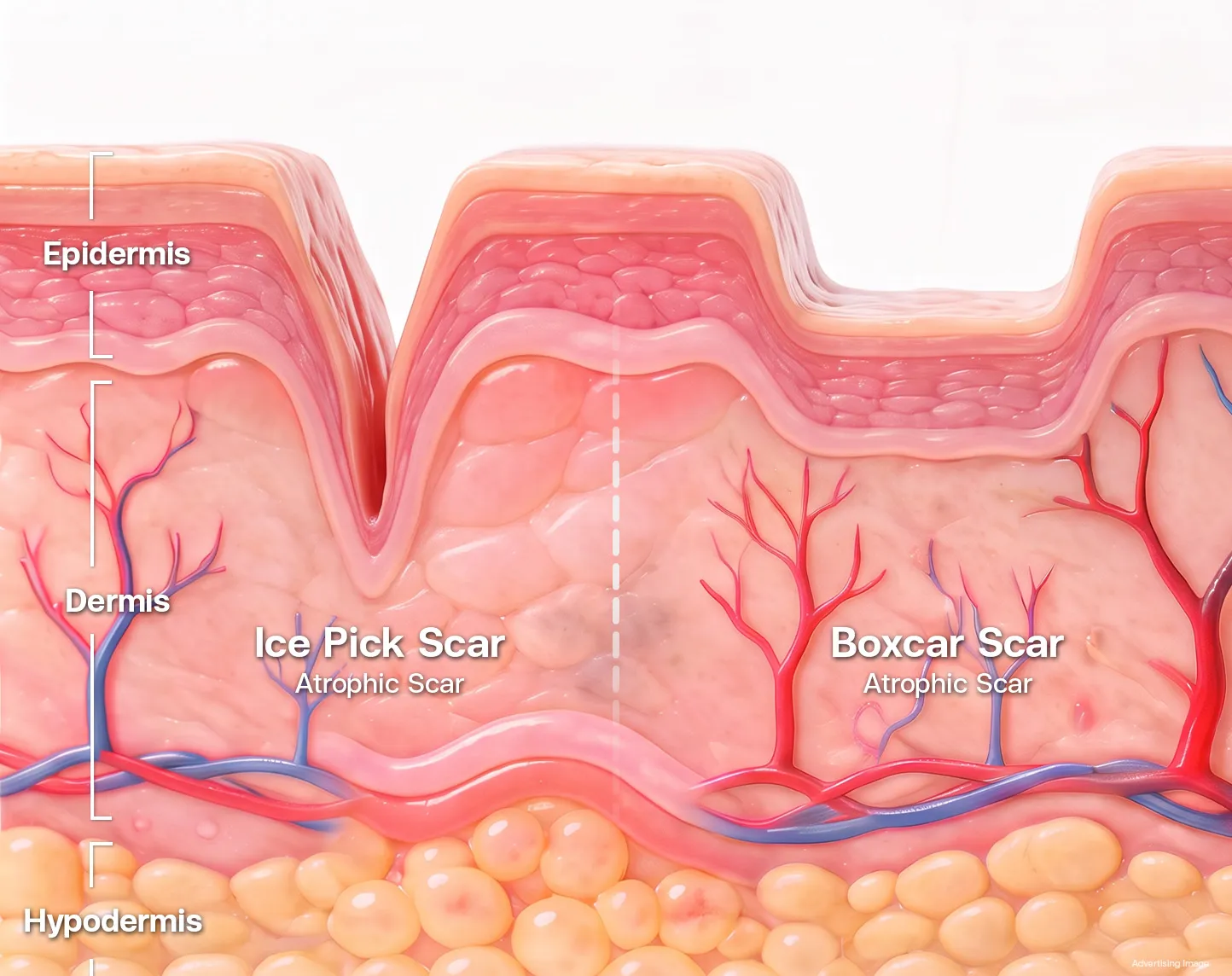
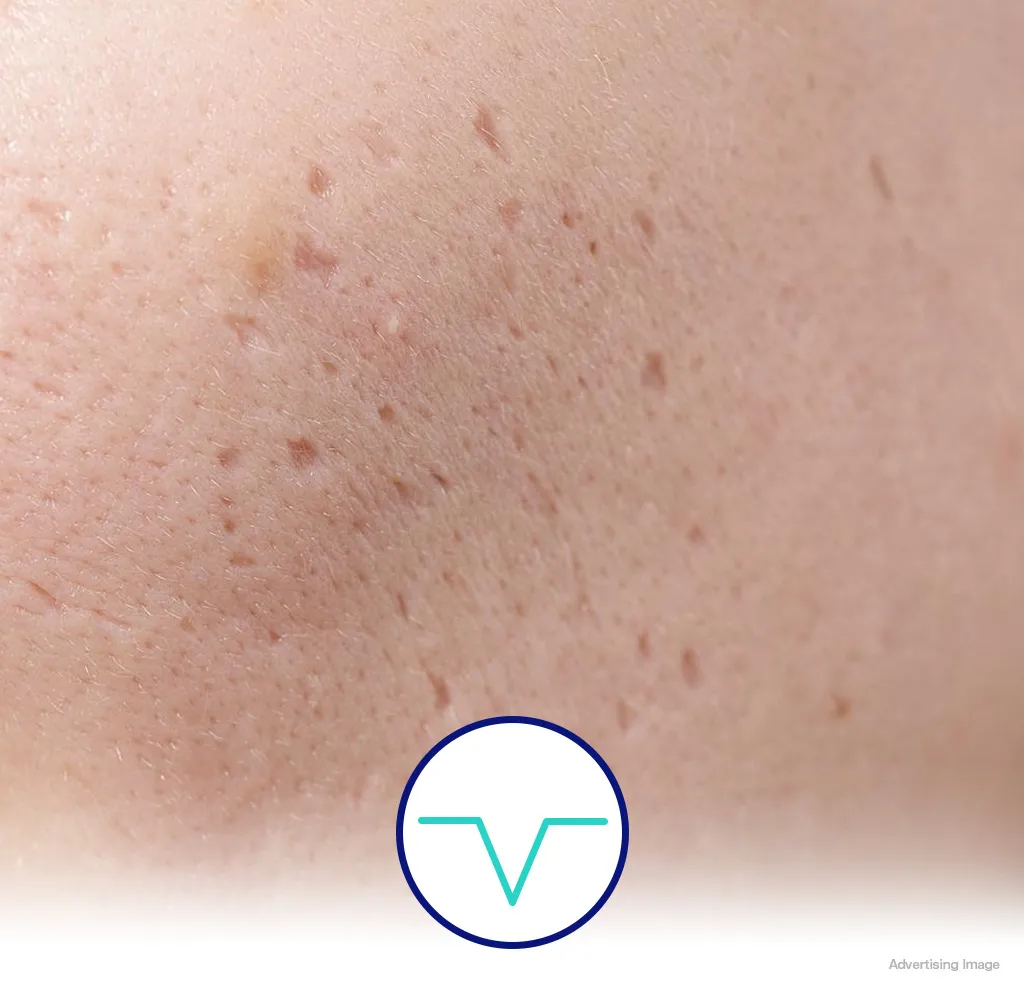
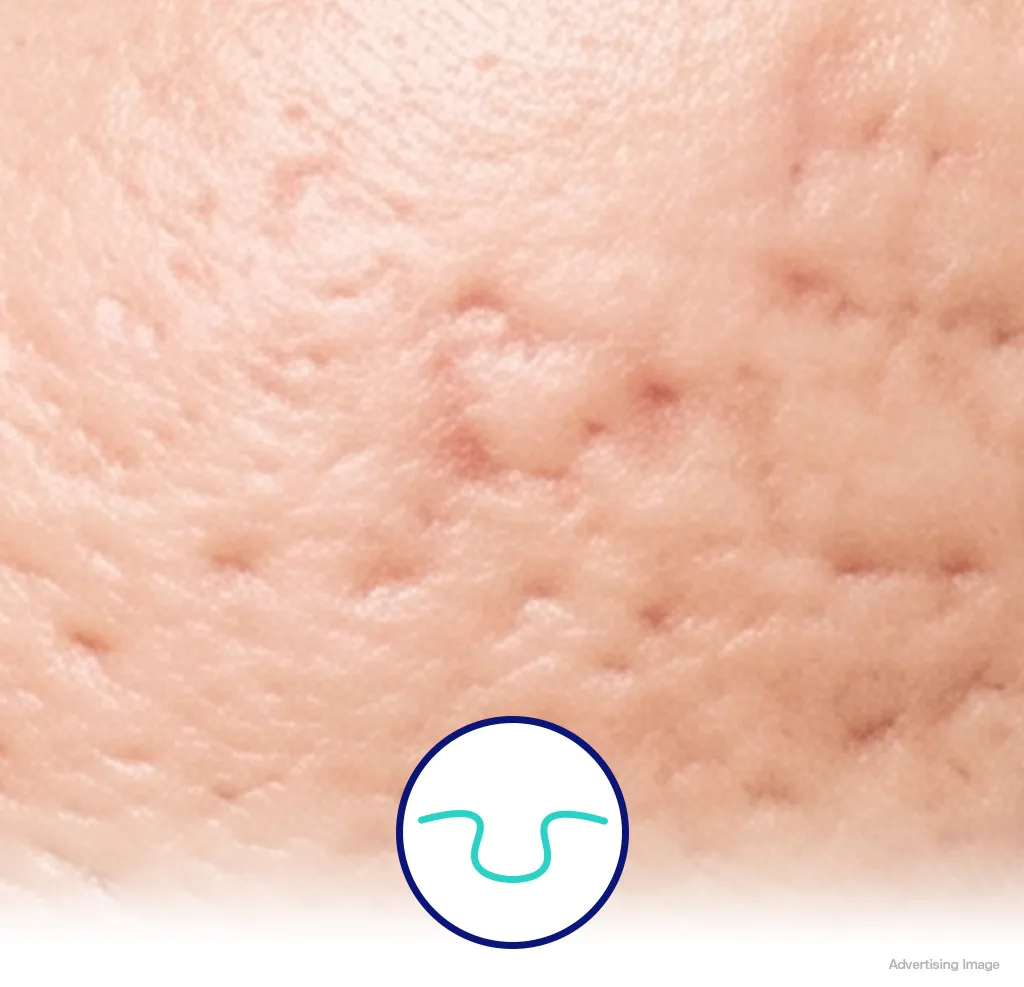
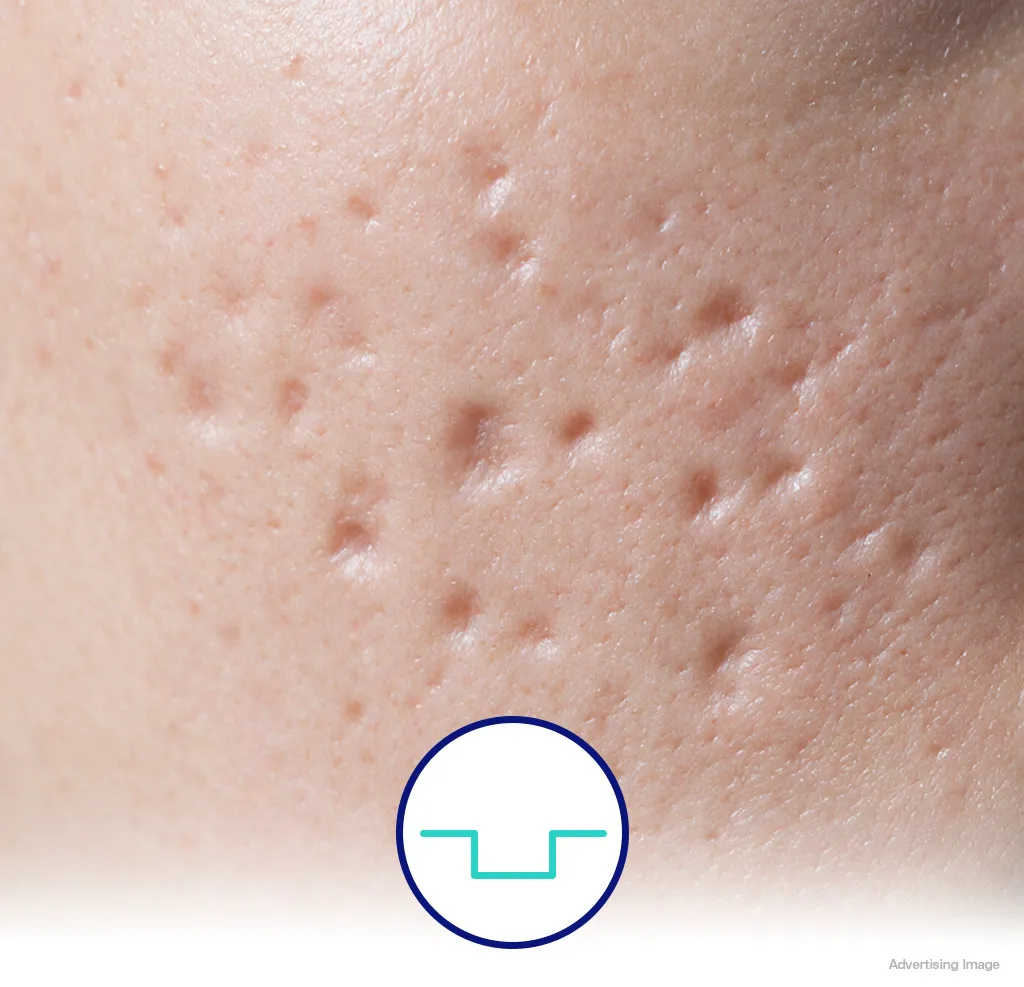
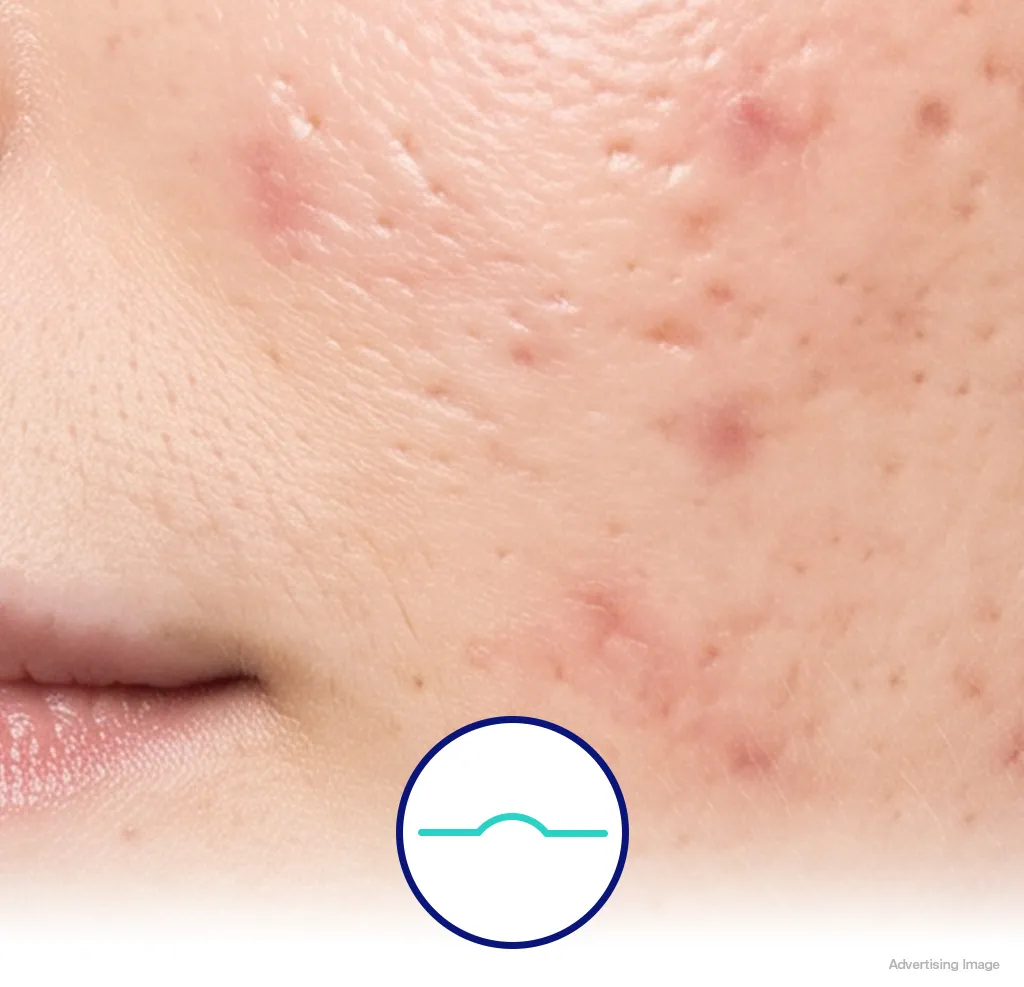
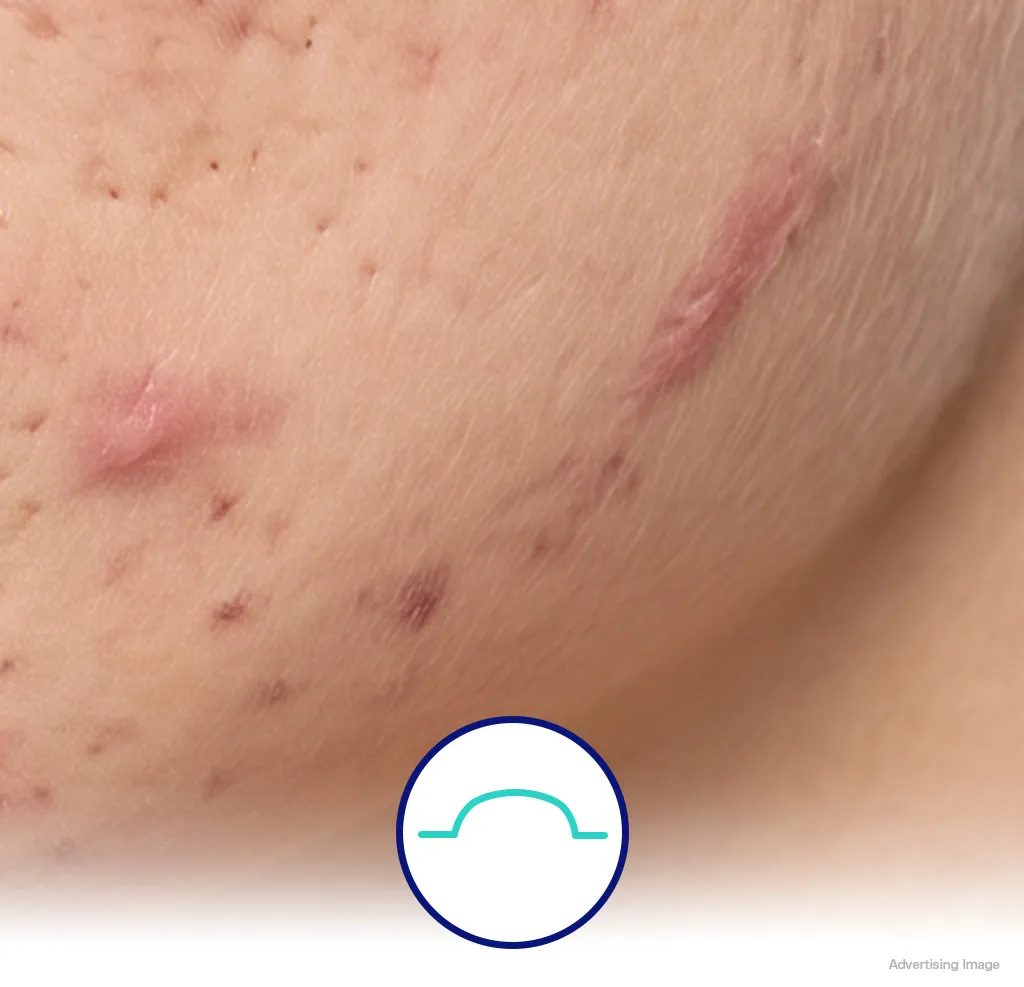
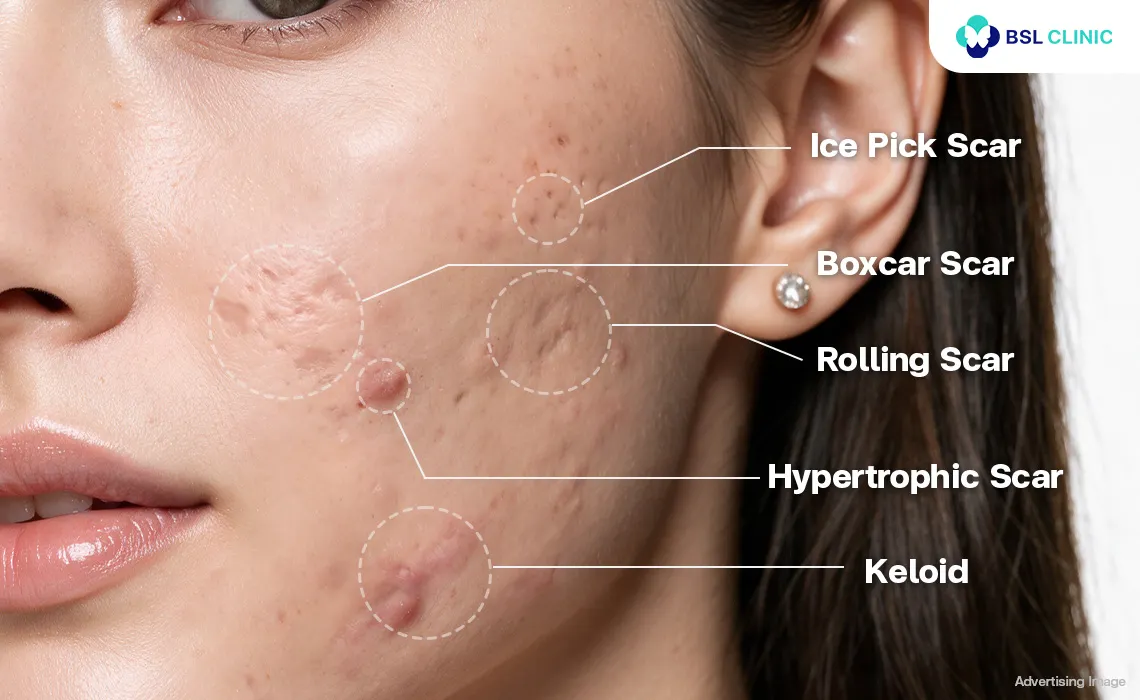
Not all acne scars look the same—and neither should they be treated the same way. The common atrophic acne scars include ice pick scars, rolling scars, and boxcar scars, while some people may also develop hypertrophic scars or keloids. Understanding your scar type is the first step toward choosing the proper acne scar treatment.

Types of Acne Scars
Types of Acne Scars
Ice Pick Scars

Characteristics

  • Small, narrow, cone-shaped scars that extend deep into the dermis.
  • The deepest and one of the most challenging types of acne scars to treat.

What Causes It?

  • Severe inflammatory acne that damages collagen deep within the skin.
Rolling Scars

Characteristics

  • Broad, shallow depressions with gently sloping edges.
  • Create a wavy or uneven skin texture.

What Causes It?

  • Fibrous bands beneath the skin pull the surface downward after inflammatory acne heals.
Boxcar Scars

Characteristics

  • Round or oval depressions with well-defined edges and a relatively flat base.
  • May be shallow or deep depending on the severity of the original acne.

What Causes It?

  • Moderate to severe collagen loss following inflammatory acne.
Hypertrophic Scars

Characteristics

  • Raised scars that remain within the boundaries of the original acne lesion.

What Causes It?

  • Excess collagen production during the skin’s healing process.
Keloid Scars

Characteristics

  • Raised scars that extend beyond the original acne lesion and may continue to enlarge over time.

What Causes It?

  • Abnormal wound healing with excessive collagen production.

Most people have more than one type of acne scar, which is why a personalized treatment plan is often more effective than relying on a single procedure. Once the doctor has identified your scar type and assessed your skin condition, the proper treatment options can be selected to achieve the best possible results.

Acne Scar Type

How to get rid of Acne Scars: Acne Scar Treatment Options

Choosing the right acne scar treatment starts with identifying your scar type. Treatment depends on the type and severity of your scars, as well as your skin condition. Because many people have more than one type of acne scar, doctors often recommend a personalized treatment plan to improve overall treatment outcomes.

Common Acne Scar Treatments by Scar Type

Common Treatment Options

  • Punch Excision, TCA CROSS (Trichloroacetic Acid), Microneedling RF​

Treatment Goal

  • Reduce scar depth and stimulate collagen production.

Common Treatment Options

  • Subcision, Dermal Fillers, Fractional Laser​

Treatment Goal

  • Release fibrous bands and restore collagen for a smoother skin surface.

Common Treatment Options

  • Punch Excision, TCA Chemical Peel, Fractional Laser, Microneedling RF​

Treatment Goal

  • Soften scar edges while stimulating collagen to improve skin texture and reduce scar depth.

Common Treatment Options

  • Intralesional Corticosteroid Injections (ILK), Selected Laser Treatments, Silicone Gel Sheets

Treatment Goal

  • Flatten raised scars, improve skin texture, and help prevent further scar growth.
Acne Scar Type
Common Treatment Options
Treatment Goal
Ice Pick Scars
Punch Excision, TCA CROSS (Trichloroacetic Acid), Microneedling RF
Reduce scar depth and stimulate collagen production.
Boxcar Scars
Punch Excision, TCA Chemical Peel, Fractional Laser, Microneedling RF
Soften scar edges while stimulating collagen to improve skin texture and reduce scar depth.
Rolling Scars
Subcision, Dermal Fillers, Fractional Laser
Release fibrous bands and restore collagen for a smoother skin surface.
Hypertrophic & Keloid Scars
Intralesional Corticosteroid Injections (ILK), Selected Laser Treatments, Silicone Gel Sheets
Flatten raised scars, improve skin texture, and help prevent further scar growth.

*Microneedling RF may be recommended for deep boxcar scars depending on the severity of the scar and doctor’s assessment.

Why your scar type matters: Different acne scar types respond differently to treatment. A doctor can assess your scar characteristics, treatment goals, and individual needs to tailor an appropriate treatment plan.

consults

How To Prevent New Acne Scars

The recommended way to prevent acne scars is to treat inflammatory acne as early as possible. Early treatment helps reduce inflammation, minimize collagen damage, and lower the risk of permanent scarring. While acne scars cannot always be prevented, controlling active acne before it becomes severe is the right approach to protect your skin.

In general, newer acne scars are easier to treat than older scars because there is usually less collagen damage and fewer fibrous bands beneath the skin. Delaying treatment allows scars to mature, making them more difficult to improve and often requiring a combination of procedures to achieve noticeable results. If you notice persistent redness after acne has healed or early signs of skin depressions, it’s best to consult a doctor as soon as possible.

💡 Tips to Help Prevent Acne Scars

Although acne scars cannot always be prevented, these simple habits can significantly reduce your risk:

Ultimately, preventing acne scars starts with controlling active acne. Once acne is under control, your doctor can focus on improving existing scars with a personalized treatment plan. Without controlling ongoing breakouts, new scars may continue to form.

The BSL Approach to Acne Scar Treatment

Acne scar treatment is not about choosing the most powerful device, but selecting the right technology for each scar. At BSL Clinic, doctors consider scar type, depth, skin condition, and treatment goals when determining which options may be appropriate.

Technology Options Used at BSL

Depending on your scar type, skin condition, and treatment goals, doctors may recommend one or more technologies to target different layers of the skin. Each technology has a unique role in stimulating collagen remodeling and improving skin texture.

Morpheus8 Program
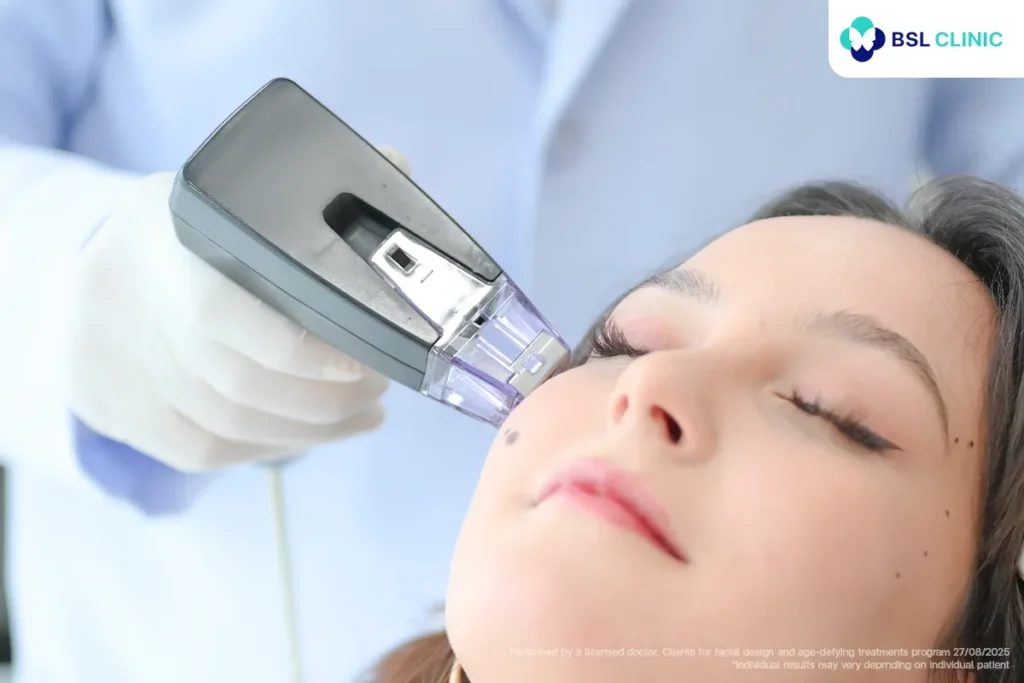
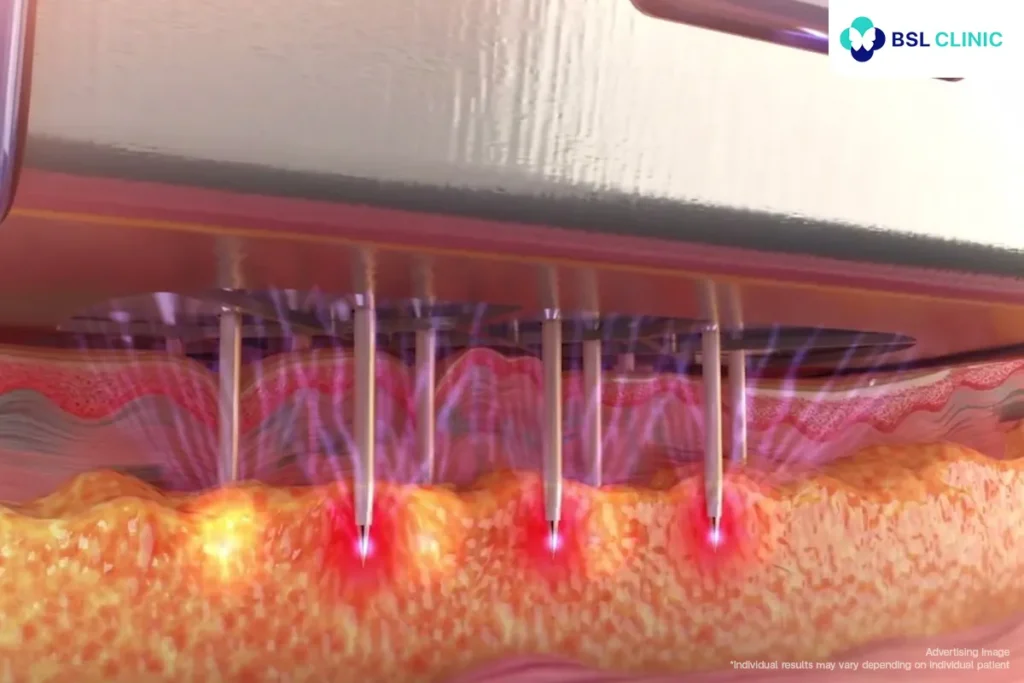
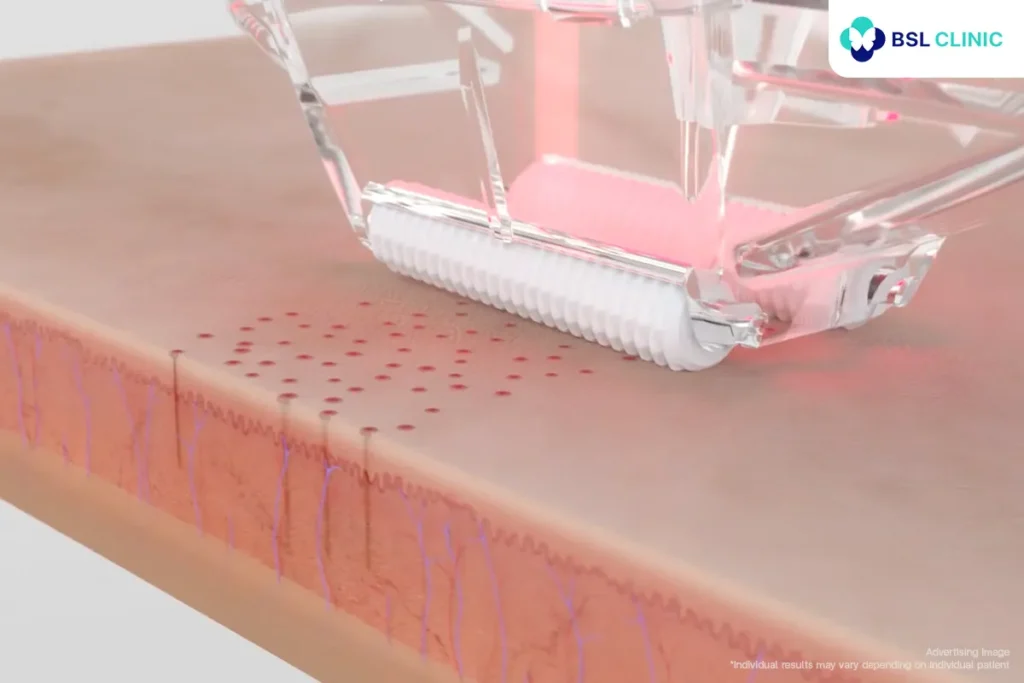
Morpheus8 Program (Microneedling RF): Deep Collagen Remodeling

Morpheus8 Program (Microneedling RF): Deep Collagen Remodeling

Microneedle Depth: Up to 4 mm

Best for: Deep ice pick scars, Acne-prone skin, Enlarged pores, Skin laxity

Primary Benefits: Delivers radiofrequency energy through microneedles into the deep dermis to stimulate collagen remodeling. Morpheus8 Program may also help reduce excess sebum production, improve acne-pron

Fractora Program
Fractora

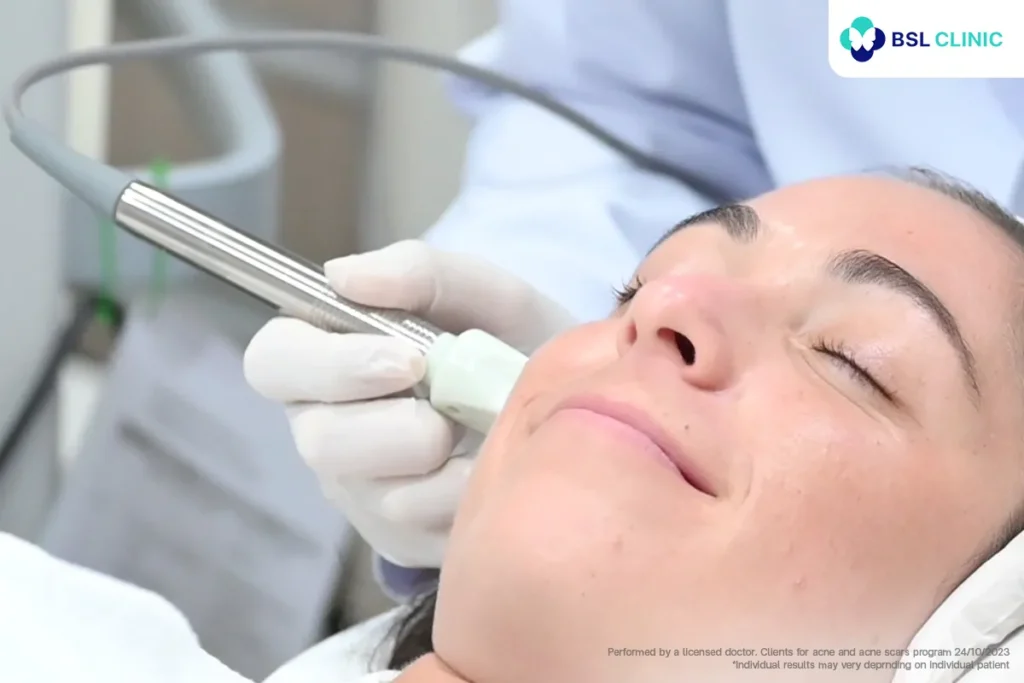
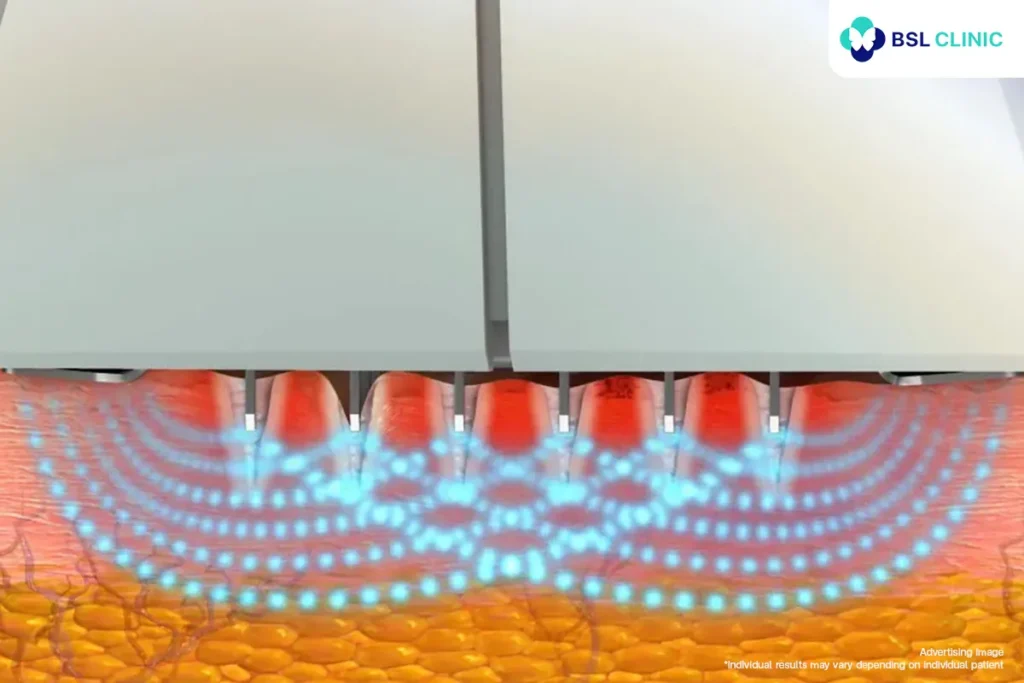
Fractora Program (Microneedling RF): RF Collagen Remodeling

Microneedle Depth: Approximately 3 mm

Best for: Ice pick scars, Deep Boxcar Scars, Uneven skin texture

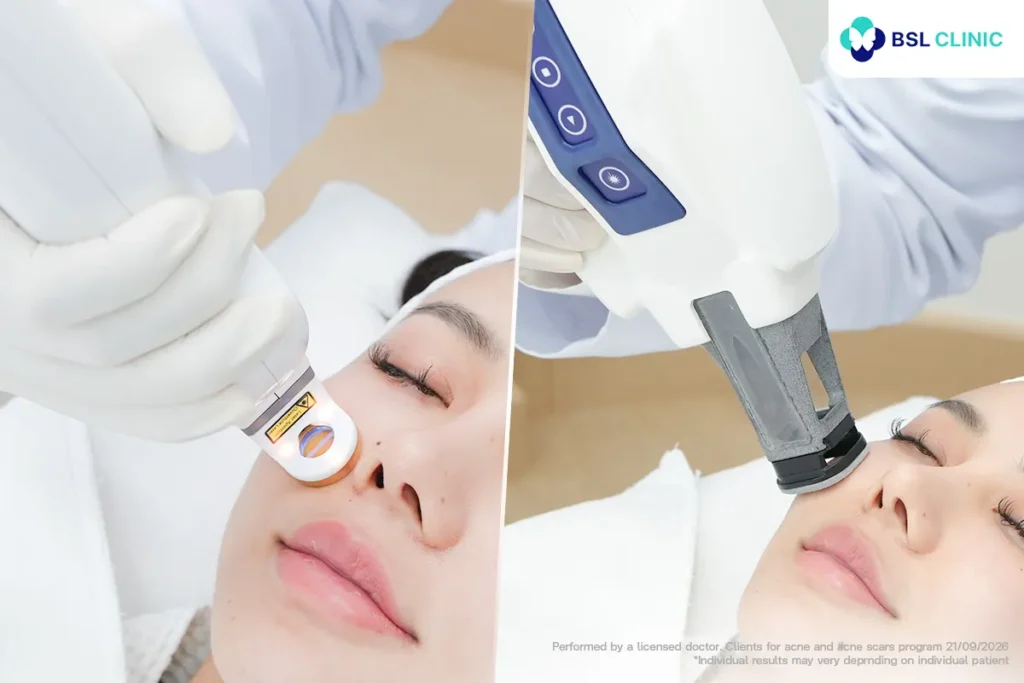
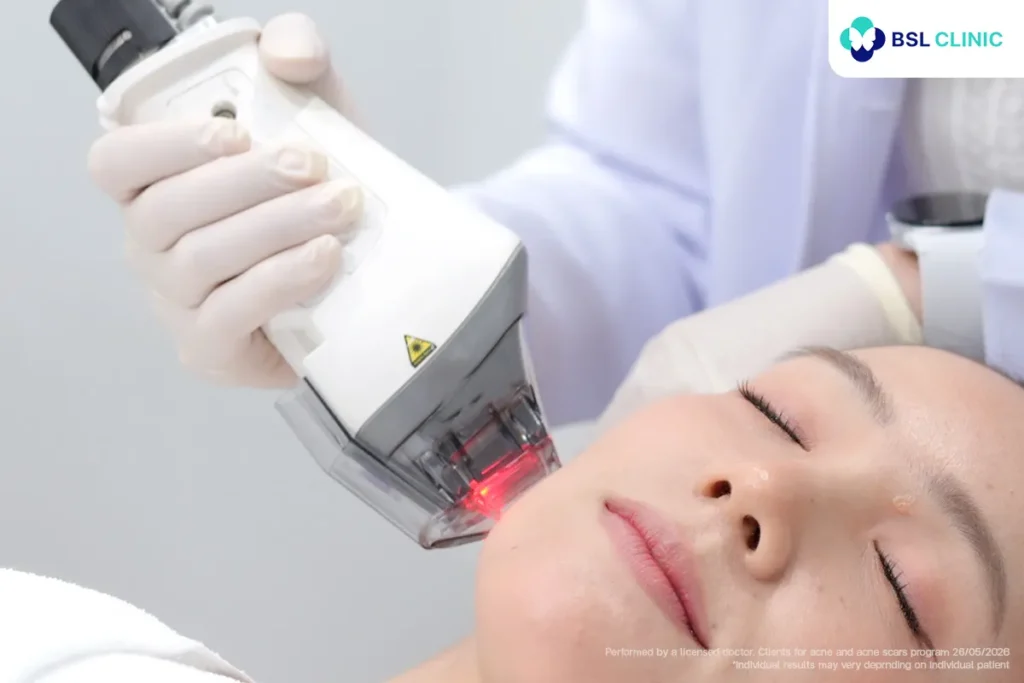
Primary Benefits: Uses fractional radiofrequency delivered through micro-pins to stimulate collagen production beneath the skin. Treatment settings can be customized based on scar depth, helping improve skin texture while minimizing damage to surrounding tissue.

Fraxel Dual Laser Program
Fraxel Dual Laser Program: Skin Resurfacing & Collagen Renewal

Fraxel Dual Laser Program: Skin Resurfacing & Collagen Renewal

Laser Penetration Depth: Approximately 0.4–1.3 mm

Best for: Rolling scars, Overall skin resurfacing, Enlarged pores, Acne-prone skin

Primary Benefits: Creates microscopic treatment zones beneath the skin to stimulate natural collagen remodeling while preserving surrounding healthy tissue. It gradually improves acne scars, skin texture, enlarged pores, and overall skin quality.

Pico Fractional Laser Program

Pico Fractional Laser Program: Texture Refinement & Collagen Stimulation

Laser Penetration Depth: Approximately 0.2–0.4 mm

Best for: Boxcar scars, Enlarged pores, Uneven skin texture, Mild acne scars

Primary Benefits: Uses photoacoustic energy to stimulate collagen and elastin production with minimal thermal damage. It helps refine superficial acne scars, smooth skin texture, and reduce downtime compared with traditional resurfacing lasers.

CO₂ Laser Program

CO₂ Laser Program: Ablative Skin Resurfacing

Treatment Depth: Approximately 0.02 mm

Best for: Boxcar Scars, Superficial atrophic scars, Scar edge resurfacing

Primary Benefits: CO₂ Laser is an ablative laser that precisely removes damaged skin tissue while stimulating the skin’s natural healing process. As new collagen forms during healing, it helps smooth uneven skin texture, soften scar edges, and improve the appearance of acne scars over time. Treatment settings can be adjusted based on the scar type, depth, and individual skin condition.

Fractional CO₂ Laser: An Additional Resurfacing Option
Fractional CO₂ Laser Program

Fractional CO₂ Laser Program: Fractional Skin Resurfacing

Treatment Depth: Approximately 0.2–0.8 mm

Best for: Superficial atrophic scars, Uneven skin texture, Enlarged pores, Fine lines and photoaged skin

Primary Benefits: Uses fractional ablative laser technology to create microscopic treatment zones (MTZs), resurfacing damaged skin while stimulating collagen renewal beneath the surface. This dual action helps improve superficial acne scars, uneven skin texture, enlarged pores, and overall skin quality over time.

Regenerative Therapies That Enhance Acne Scar Treatment

To further enhance treatment outcomes and support skin recovery, doctors may recommend regenerative therapies alongside laser treatment when appropriate.

Rejuran Program

Supports skin repair, collagen production, skin elasticity, post-treatment recovery.

Bioregenerative

Uses concentrated platelets to support the skin’s natural repair process, collagen remodeling, and post-treatment recovery.

The BSL Signature Acne Scar Journey

The BSL Signature Acne Scar Journey

Acne, acne marks, and acne scars are often connected. Ongoing breakouts can lead to redness, pigmentation, and eventually scarring, while existing scars may require a different approach to restore skin texture and quality.

3 Steps — The BSL Approach
Step 01
CURATE

Select treatment options based on scar type, depth, and skin condition.

Step 2
DESIGN

Build a treatment plan around the needs of different scar areas.

Step 3
INTEGRATE

Combine complementary treatments when appropriate.

At the BSL Clinic, doctors consider the whole skin journey—from controlling active acne and preventing future scars to improving existing scars and supporting long-term skin quality. Treatments are then curated, designed, and integrated according to each patient’s skin needs.

The BSL Skin Recovery Cycle
Control Active Acne — Accure & AviClear Programs
Step 01
Control Active Acne — Accure & AviClear Programs

Helps control excess oil and inflammatory acne, addressing ongoing breakouts that may contribute to future scarring.

Renew Skin & Improve Texture — Fraxel Dual Laser Program
Step 02
Renew Skin & Improve Texture — Fraxel Dual Laser Program

Supports skin renewal and collagen remodeling to improve rolling scars, enlarged pores, and uneven texture.

Remodel Deeper Scars — Morpheus8 Program
Step 03
Remodel Deeper Scars — Morpheus8 Program

Targets deeper layers to support collagen remodeling and improve deeper acne scars, uneven texture, and skin firmness.

Support Skin Recovery — Bioregenerative Program
Step 04
Support Skin Recovery — Bioregenerative Program

Supports natural skin repair, collagen production, and recovery following selected treatments.

Support Long-Term Skin Quality — 4R Skin Longevity
Step 05
Support Long-Term Skin Quality — 4R Skin Longevity

* Treatments are selected, combined, and timed according to each patient’s acne activity, scar characteristics, skin condition, and clinical assessment. For hypertrophic scars or keloids, doctors may also consider scar injections or other scar-specific treatments.

Why This Integrated Approach Matters

Controlling active acne helps reduce ongoing inflammation that may lead to new acne scars.

Scar-focused treatments support collagen remodeling to improve scar depth and uneven texture over time.

Supporting skin repair, texture, pores, and overall skin quality helps create smoother, more resilient-looking skin.

Ongoing care helps maintain skin condition beyond the initial acne scar treatment.

Improvements in acne, scars, and overall skin appearance may help patients feel more comfortable and confident in everyday life.

acne scar treatment at BSL Clinic

Patient Reviews & Success Stories

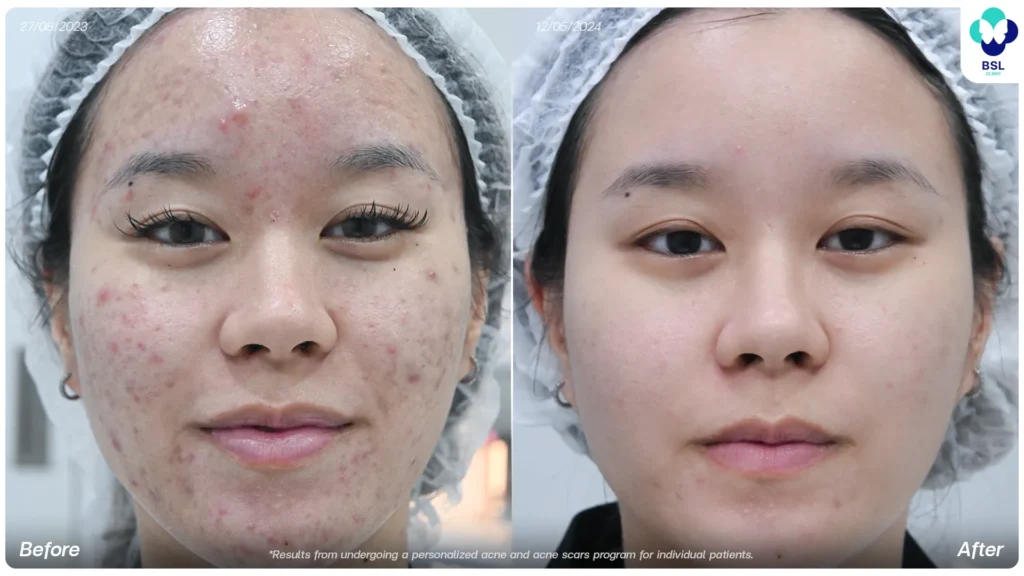
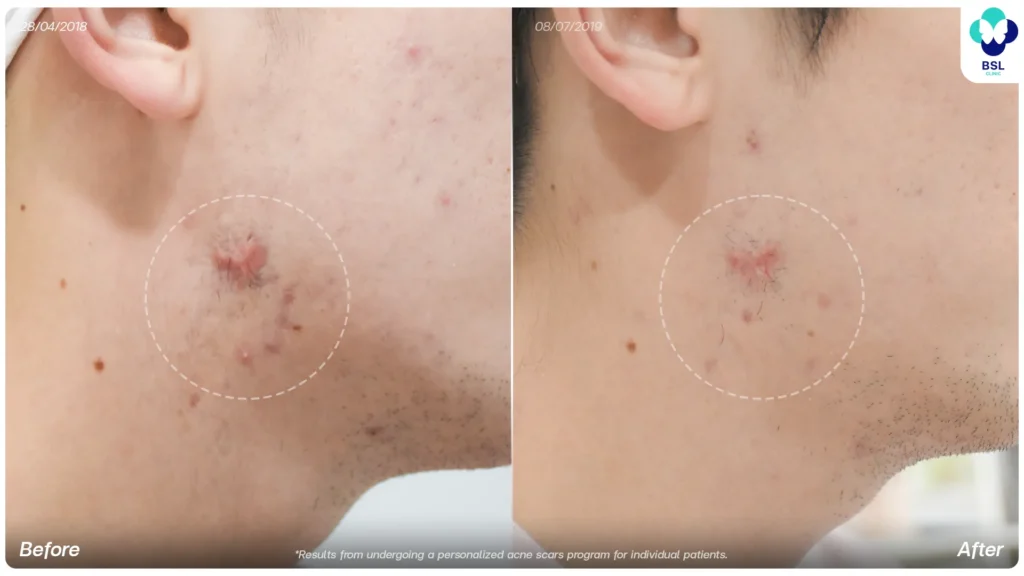
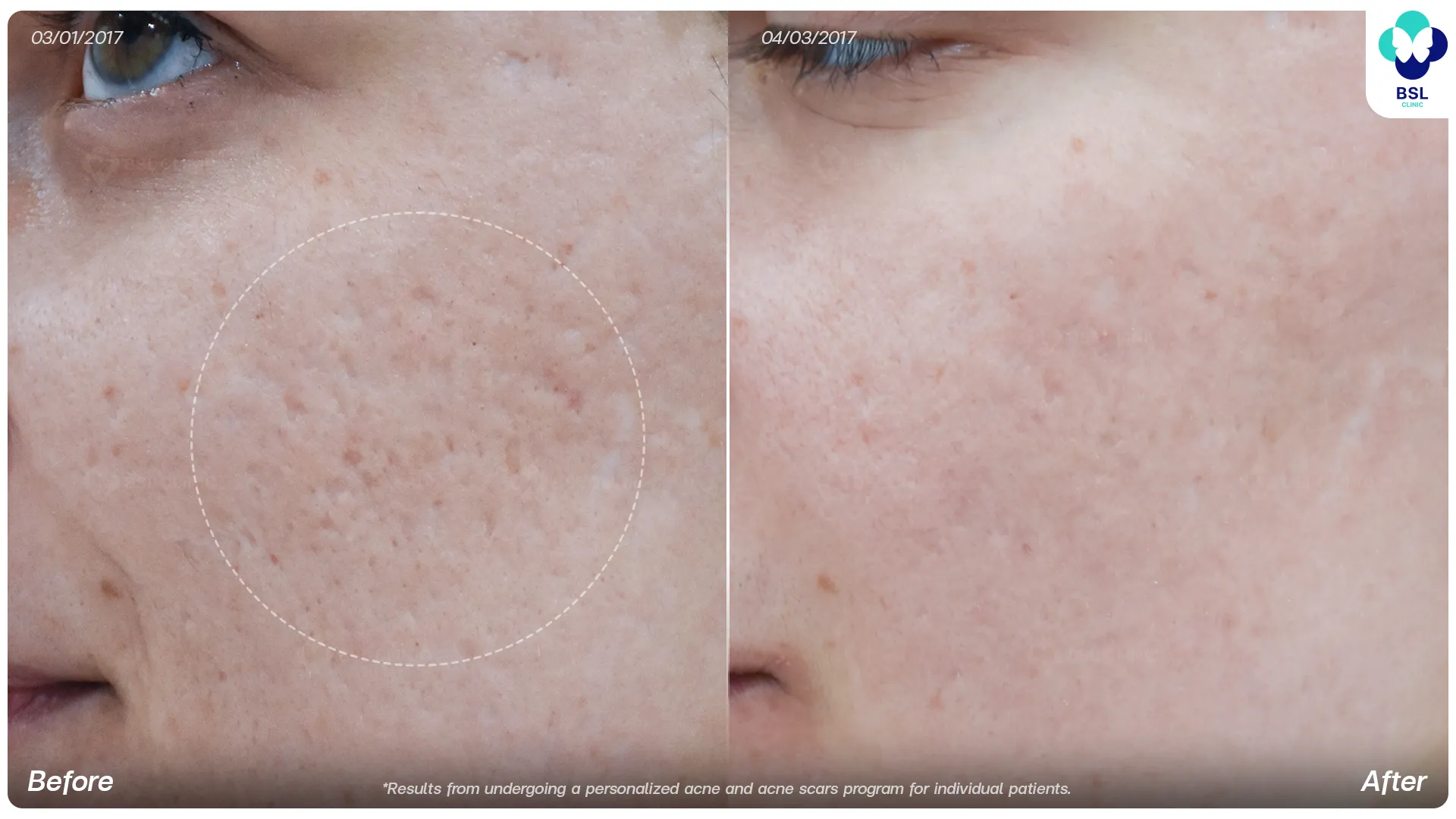
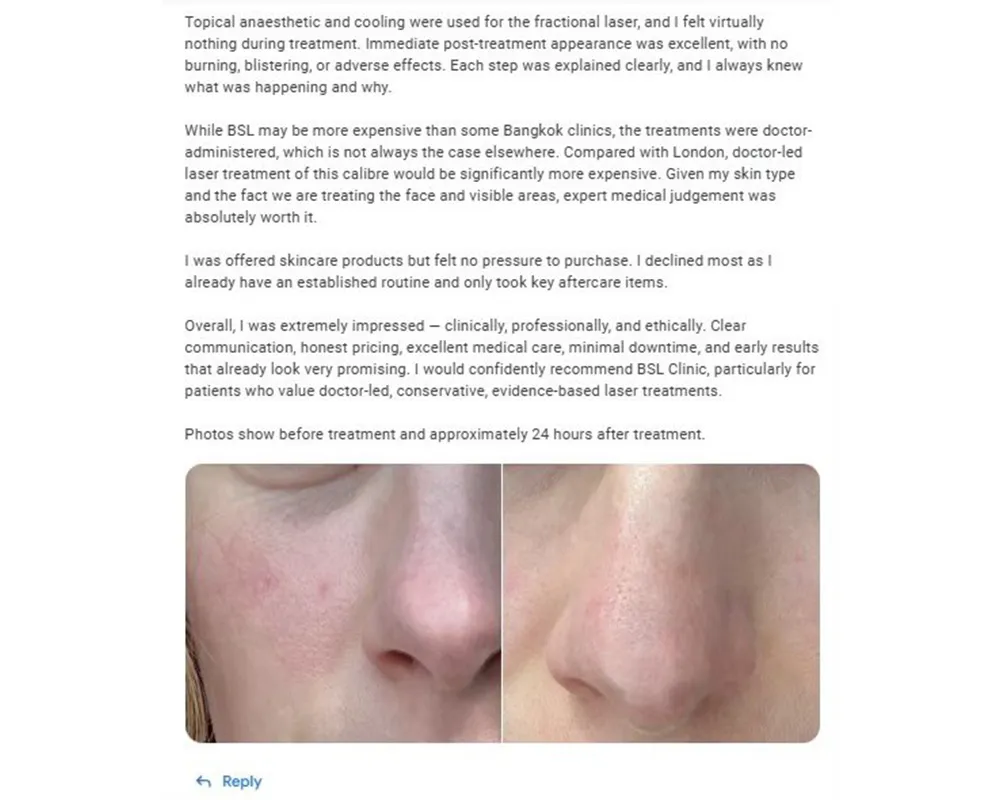
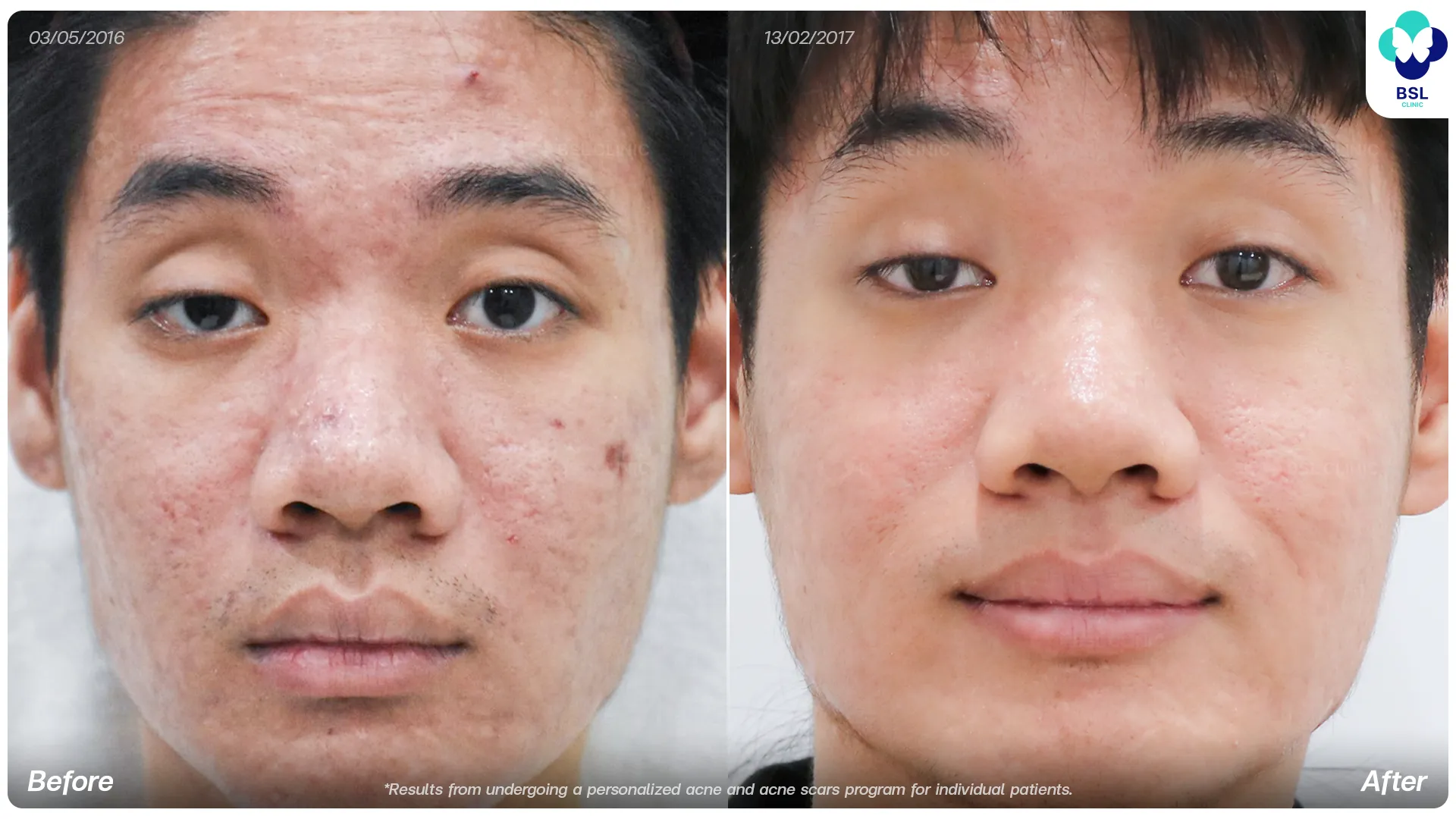
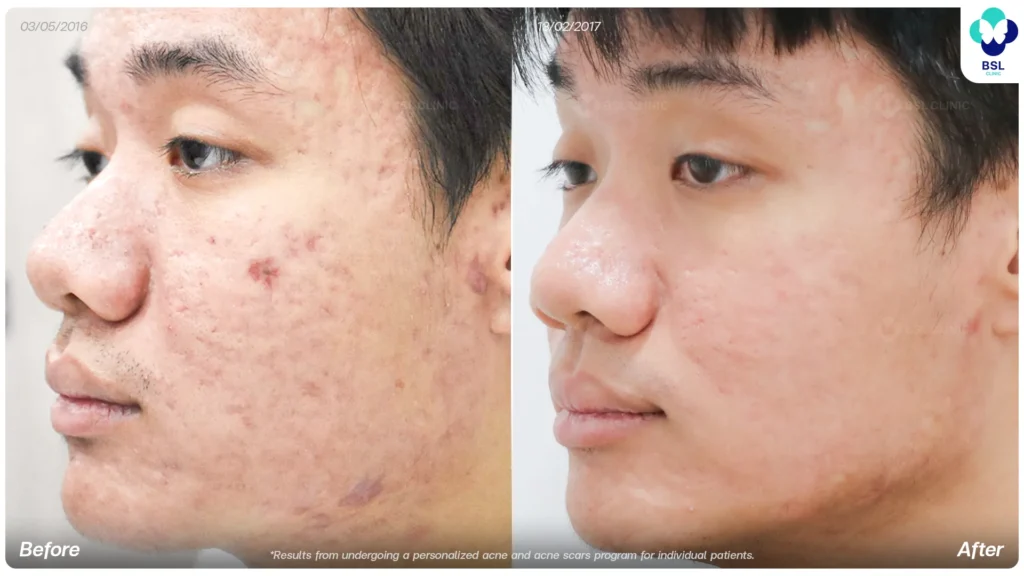
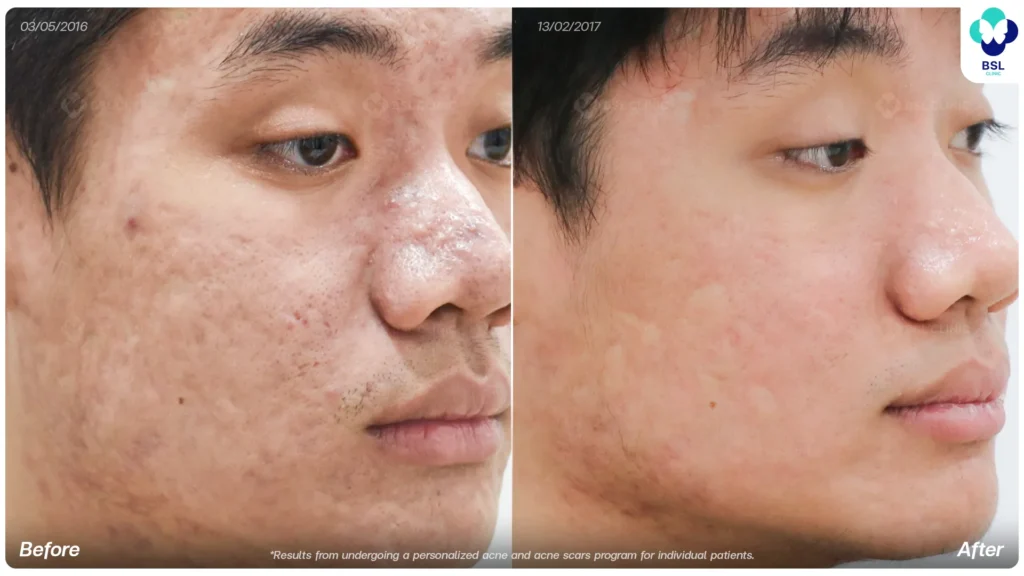
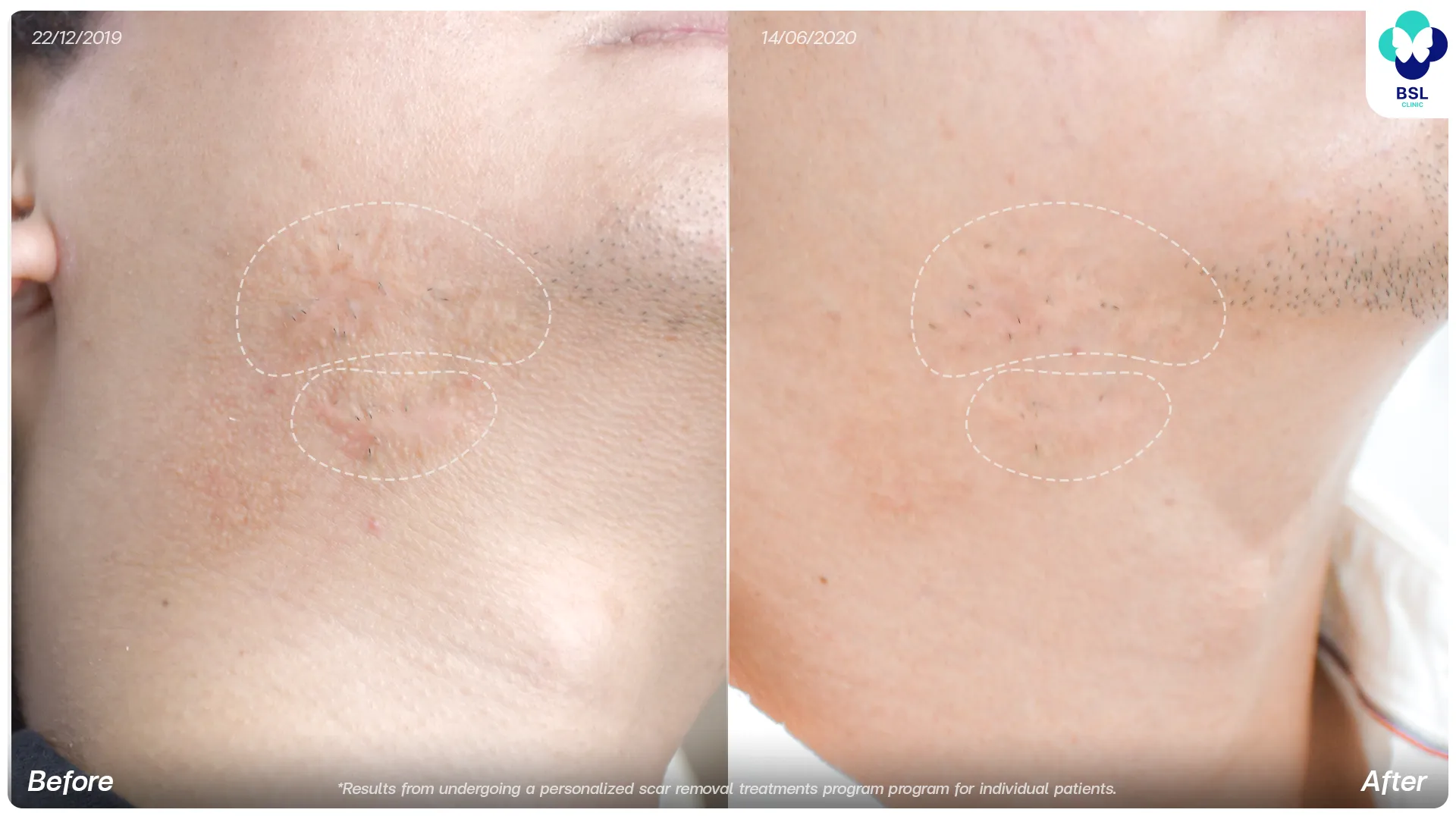
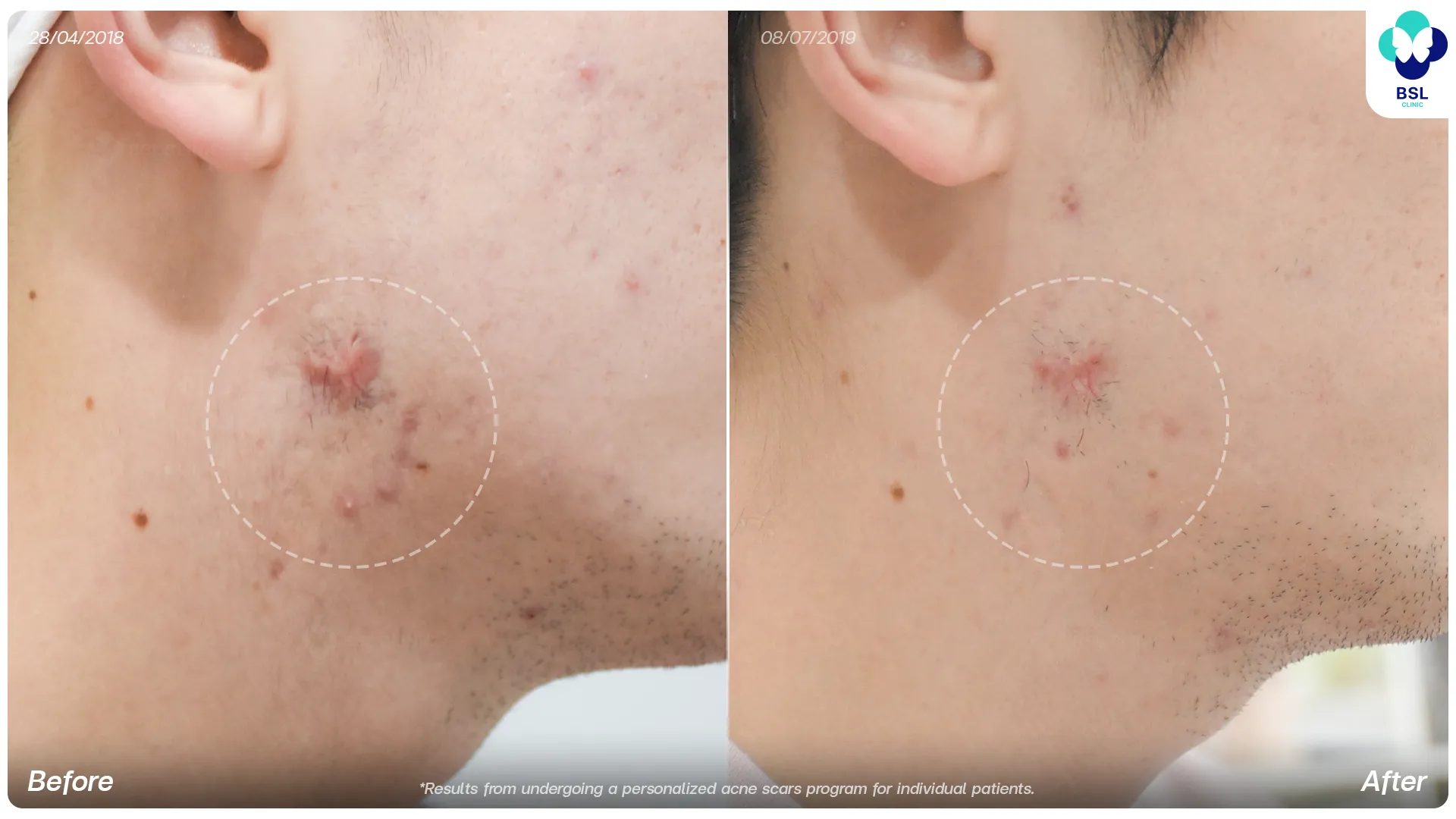
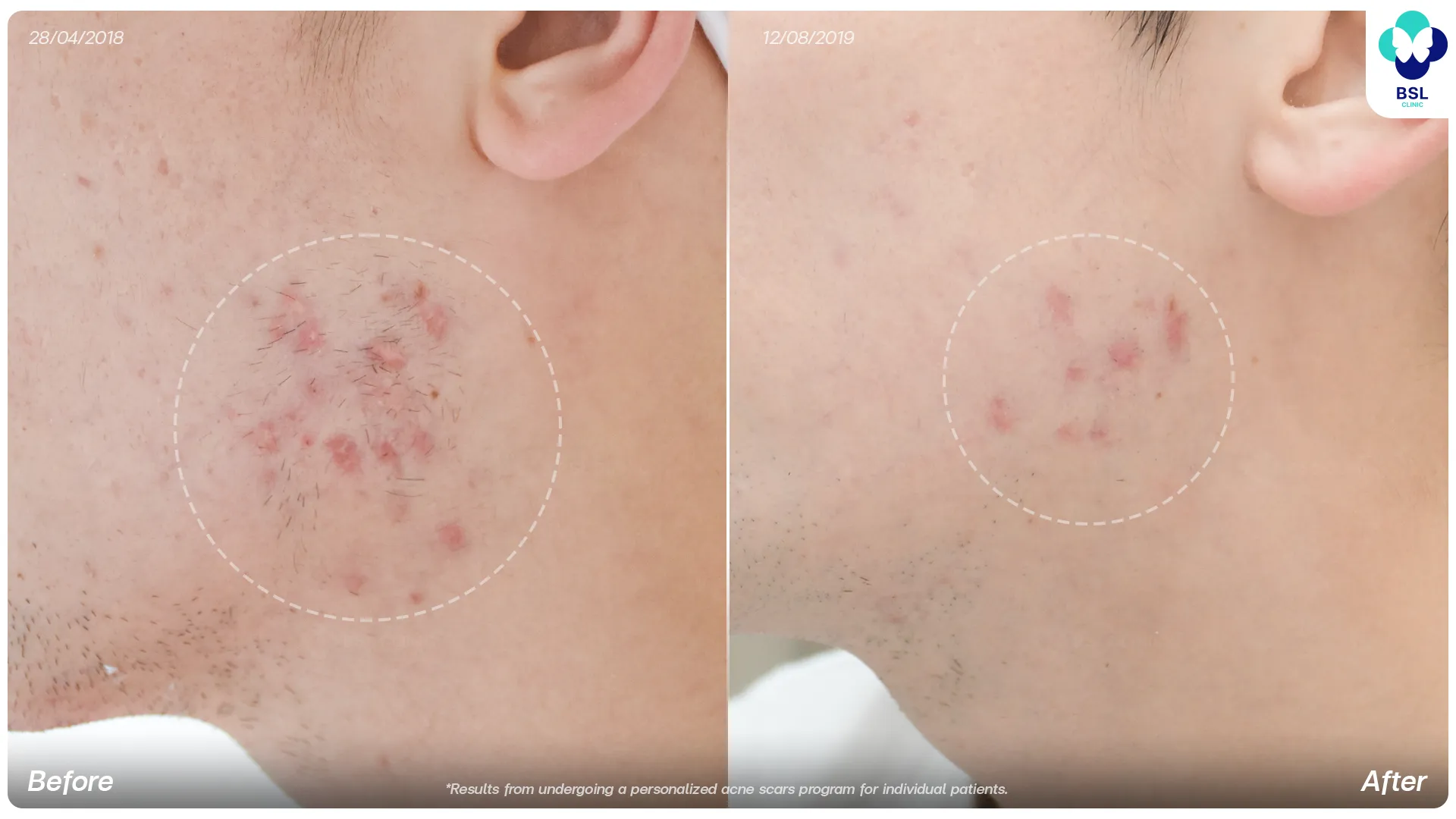
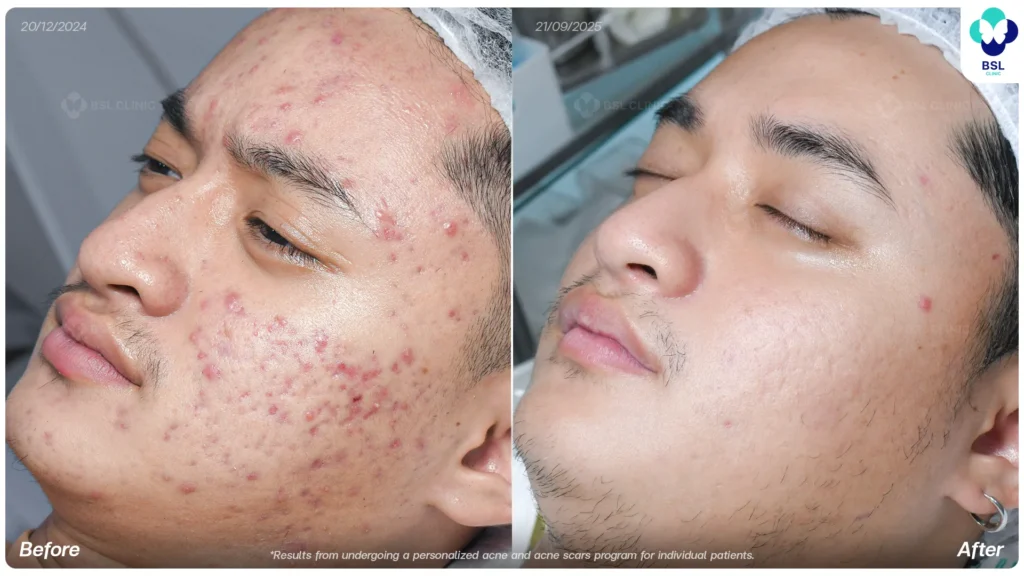
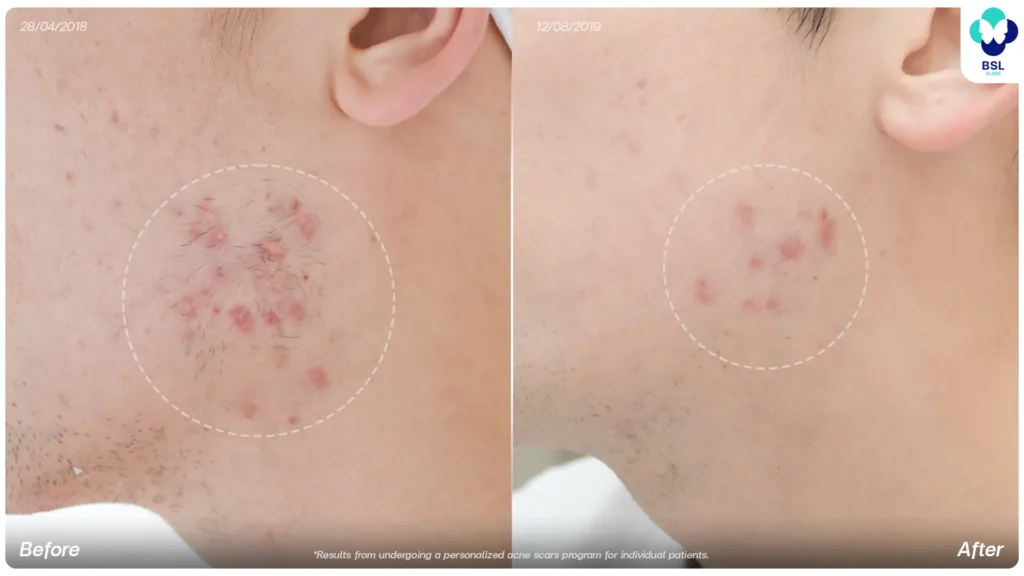
Every patient’s acne scar journey is unique, and treatment outcomes vary depending on scar type, skin condition, and individual healing response. The following patient story reflects one person’s experience after receiving a personalized acne scar treatment plan at BSL Clinic.

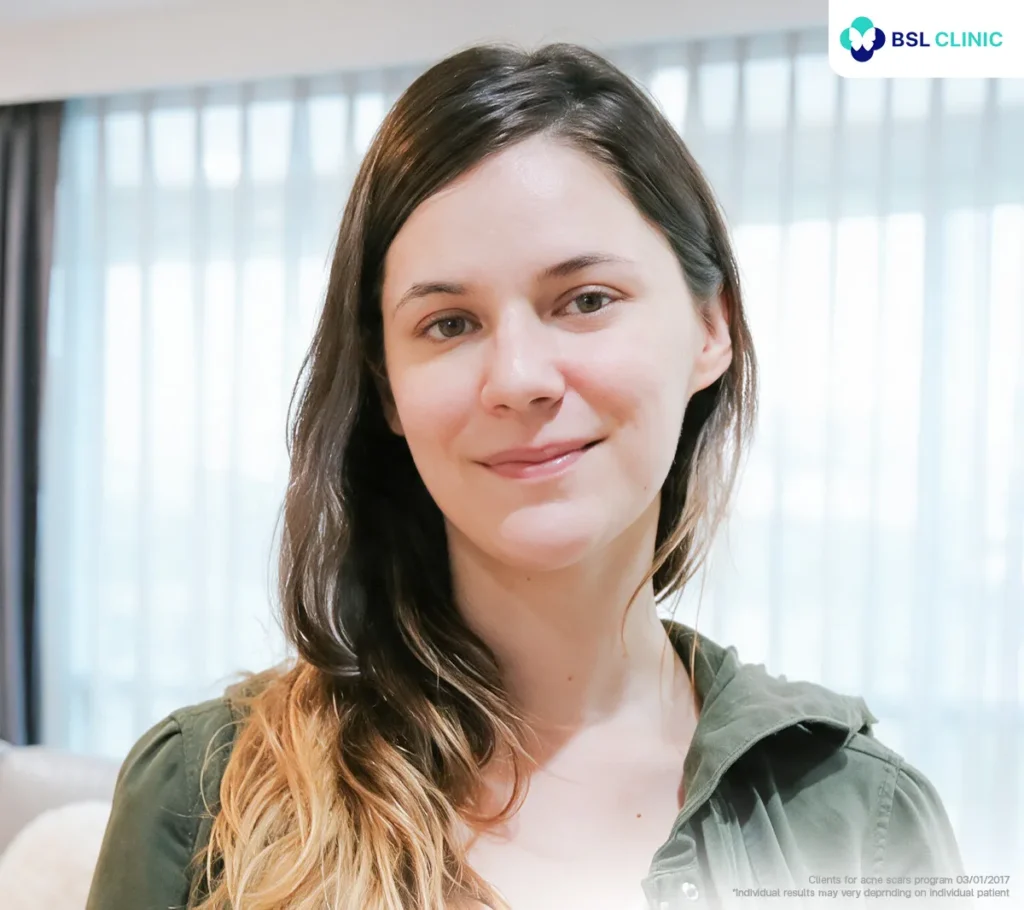
Ms. Adriana's Experience
Acne Scar can be happily treated and improved with Acne Scar Removal Laser Program.
Ms. Adriana's Experience

Ms. Adriana appreciated the professional and attentive care she received at BSL Clinic. She shared that the doctors clearly explained her skin condition and recommended a personalized Fraxel Laser treatment program, helping her feel confident throughout her treatment journey.

*Individual results may vary depending on individual patient

After completing her treatment, she noticed smoother skin, less visible acne scars, and improved confidence. She recommends consulting with the doctors at BSL Clinic to find the most suitable treatment for your skin.
acne scar treatment at BSL Clinic
What Our Patients Say

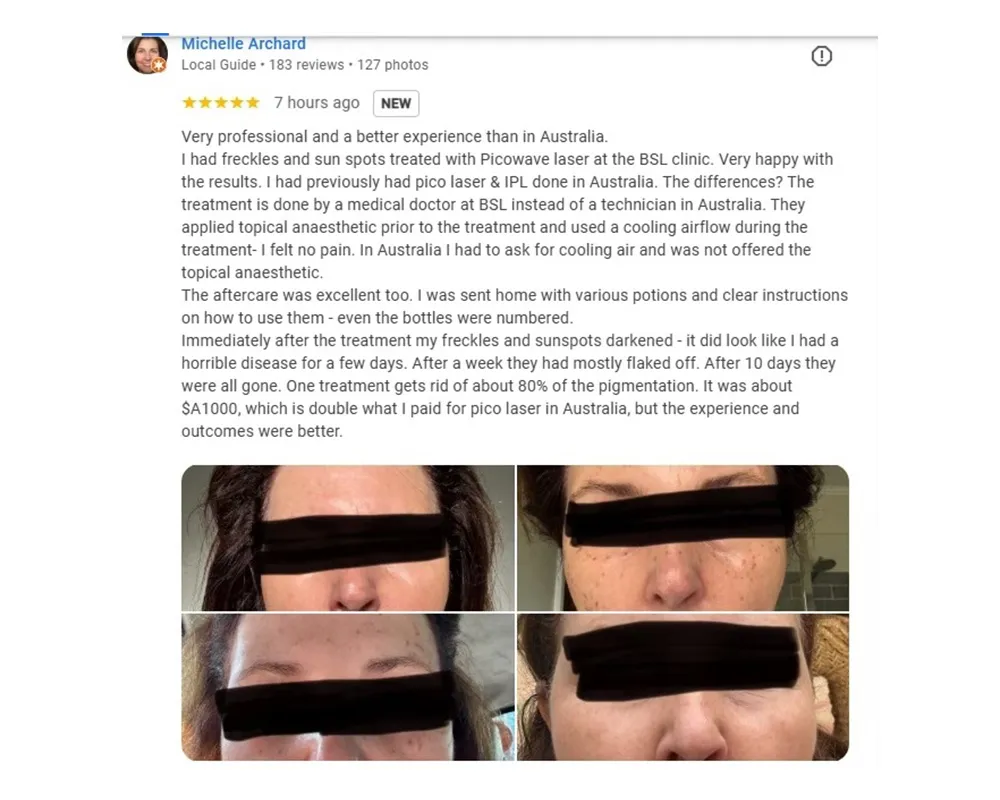
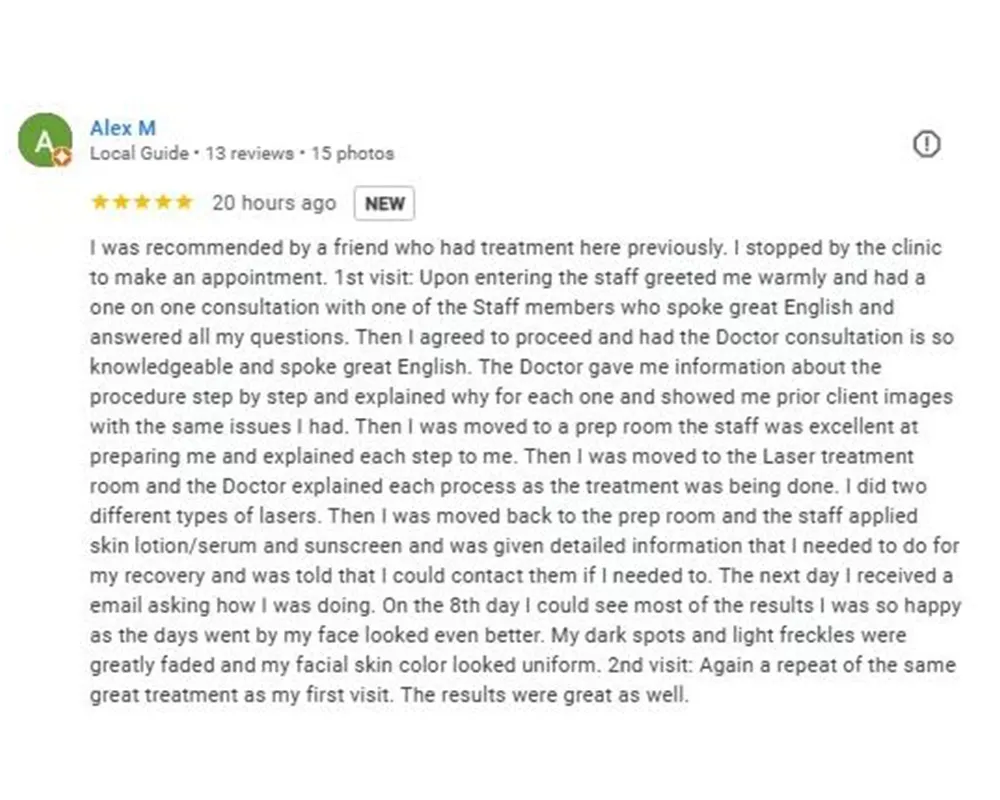
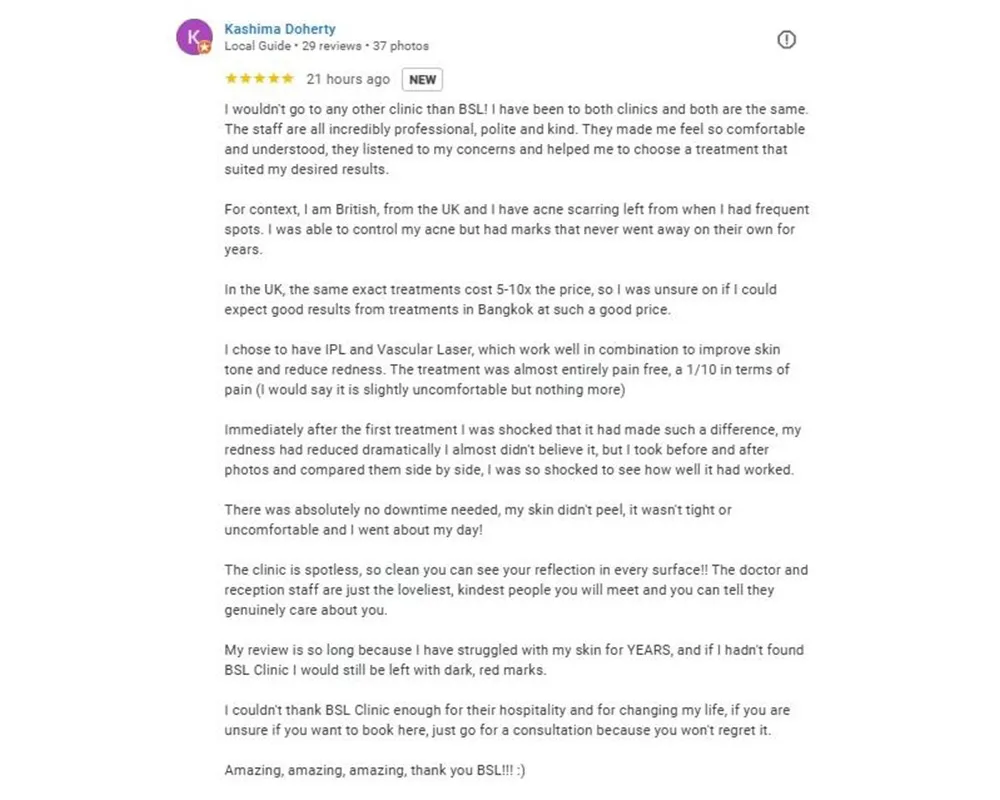
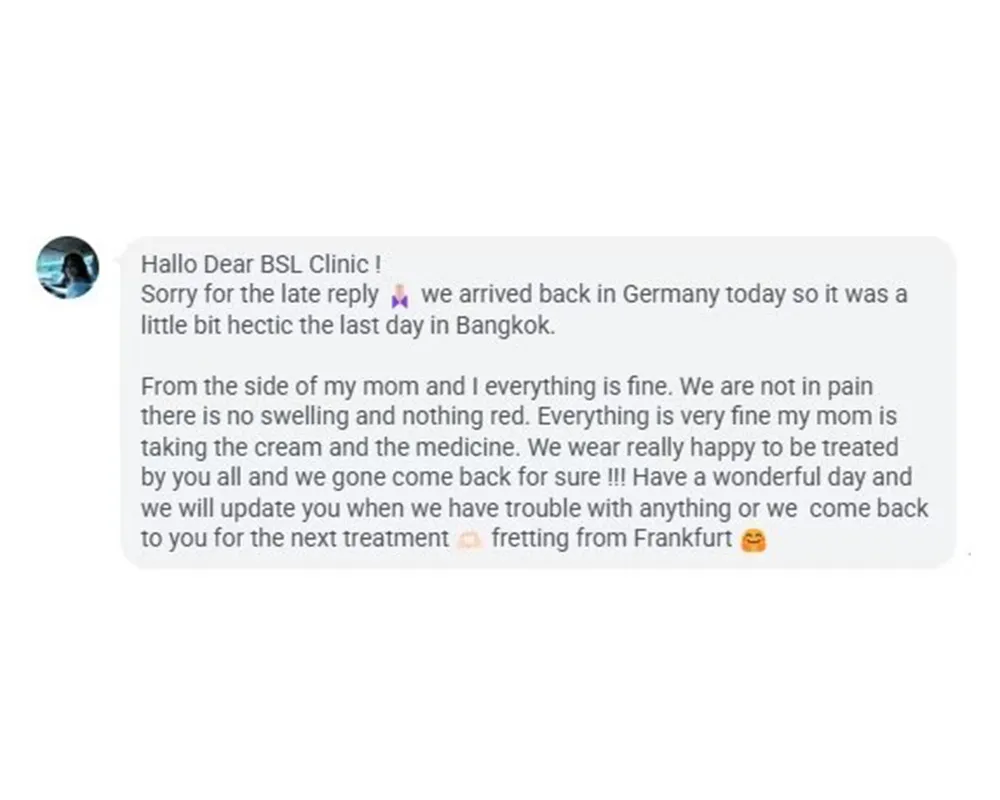
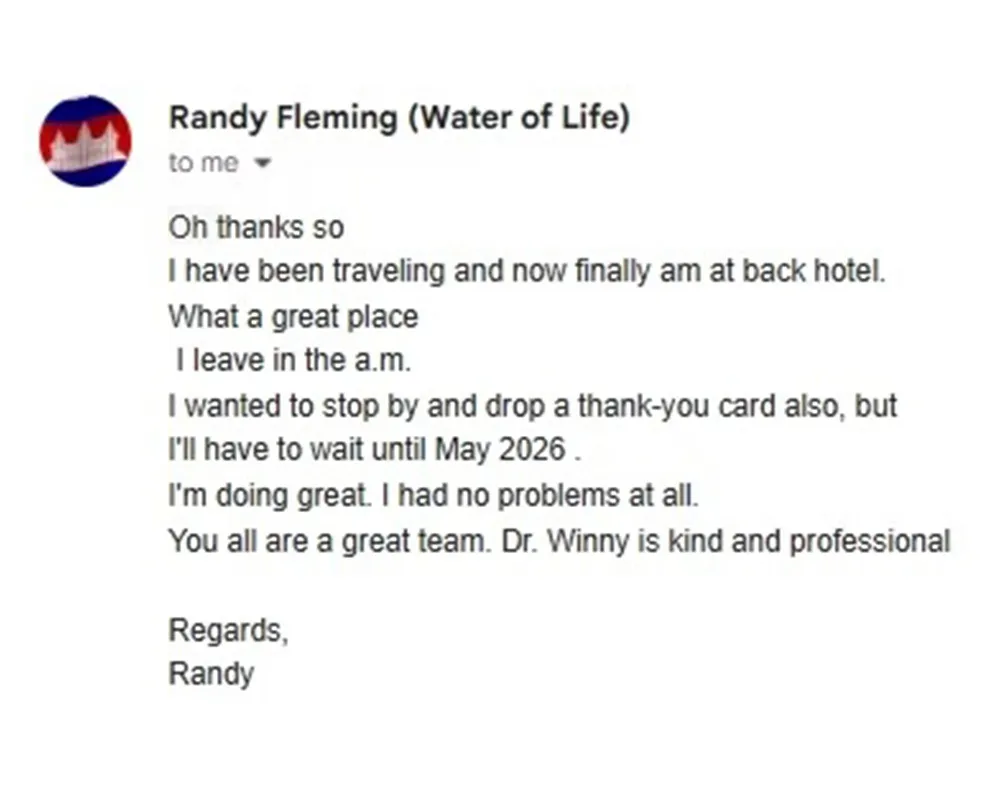
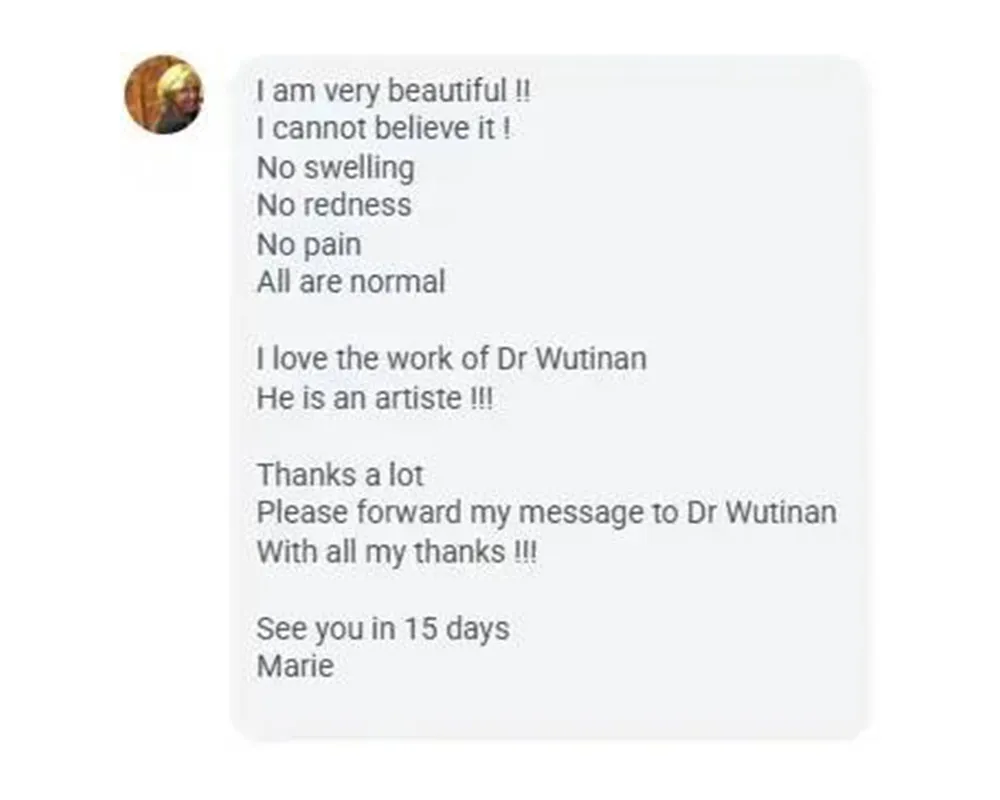
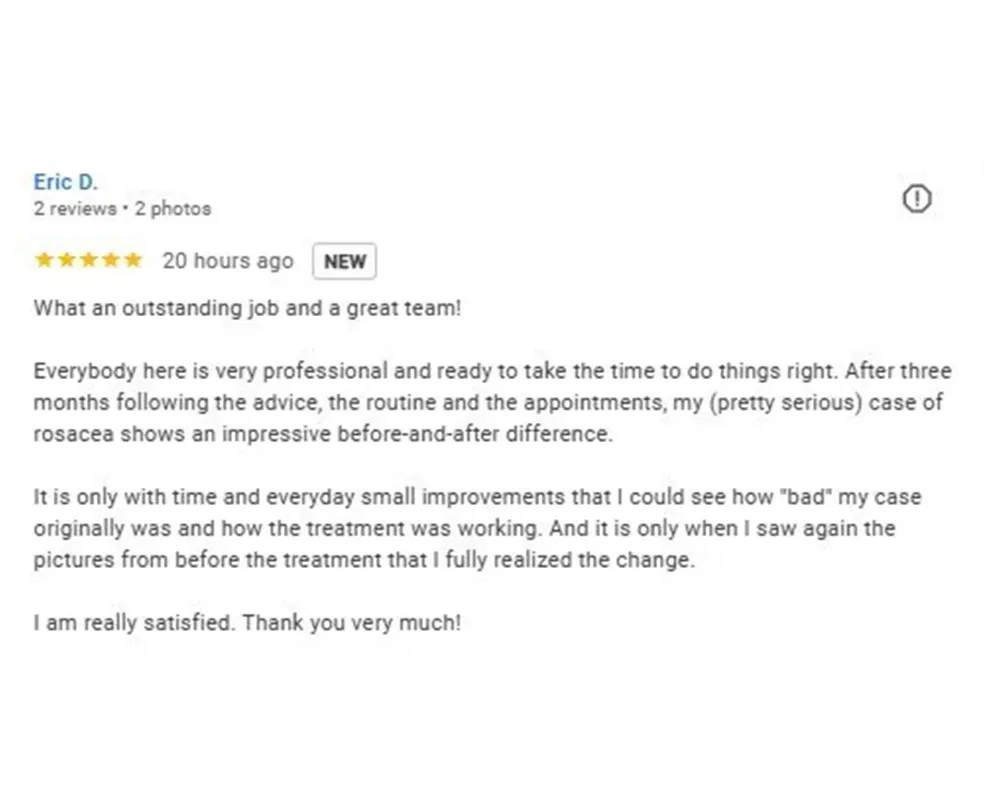
Many international patients have shared positive feedback about their acne scar treatment journey at BSL Clinic.

Before & After
acne scar treatment at BSL Clinic

FAQs about Acne Scars

No. Acne scars usually do not disappear on their own because they involve structural changes in the skin. Treatment may help make them less noticeable.

Skincare can support skin health and help with discoloration, but it usually cannot correct established scar texture. In-clinic treatment may be needed for deeper scars.

The most effective treatment depends on your scar type, depth, skin condition, and treatment goals. A personalized assessment helps determine the most appropriate approach for your scars.

Yes. In some cases, active acne and acne scars can be managed within the same treatment plan. The approach depends on the type of acne, scar characteristics, and overall skin condition.

Yes. Different scar types can be addressed within the same treatment plan, using different treatments where appropriate.

The number of sessions varies by scar type, severity, treatment method, and individual response. Doctors can recommend a treatment plan after assessing your scars.

Recovery time varies by treatment. Some treatments may cause a few days of redness, while more intensive resurfacing may require a longer recovery period.

The fastest approach depends on the type and depth of your acne scars. Identifying these characteristics first helps doctors select an appropriate treatment approach for your skin.
Combination treatment can be helpful when different scar types, depths, or skin concerns need to be addressed within the same treatment plan. The approach is selected according to your individual scar characteristics and skin condition.

No. Acne scars usually cannot be completely removed, but treatment may help make them smoother, shallower, or less noticeable.

visit BSL Clinic
Update Knowledge Trends
Skin Care from CICM 2025

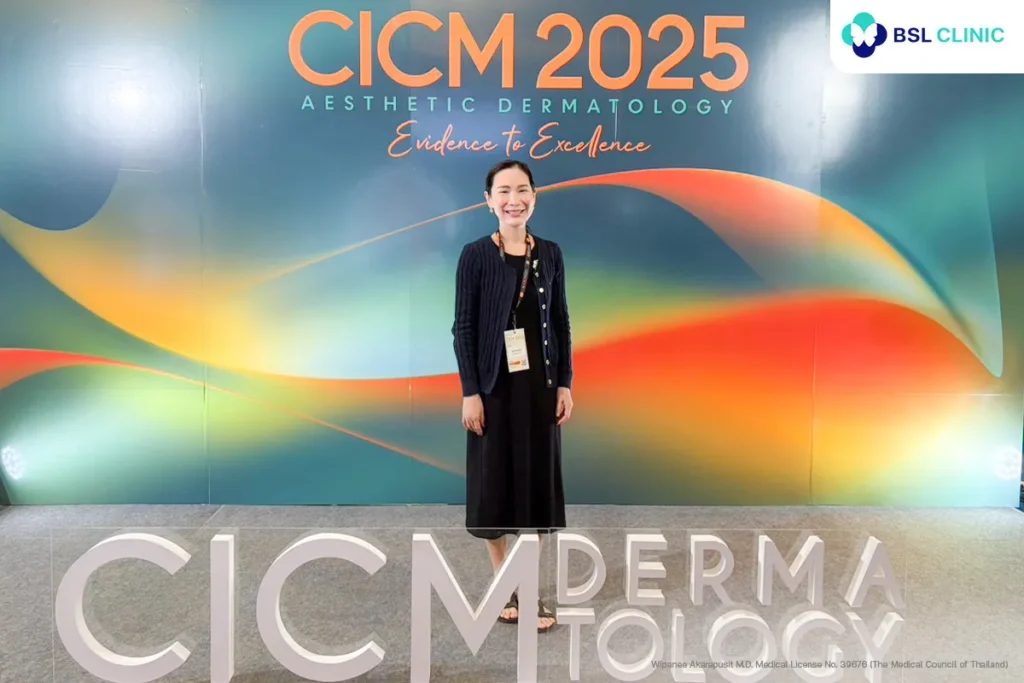
Dr. Wipanee, representing BSL, provided an update on knowledge trends with in-depth insights into skin care from CICM 2025, bringing them back to further develop treatment methods for our clients.

CICM 2025 Aesthetic Dermatology: Evidence-Based Medicine is an annual event that BSL doctors never miss, in order to stay updated with knowledge and research on dermatological treatments — including acne, melasma, freckles, hair loss, and scalp issues — as well as aesthetic procedures such as facial, neck, and body skin tightening, weight loss, and body contouring, all aimed at achieving healthy and youthful-looking skin.
Bangkok, Thailand
Wipanee Akarapusit, M.D. Medical License No. 39676
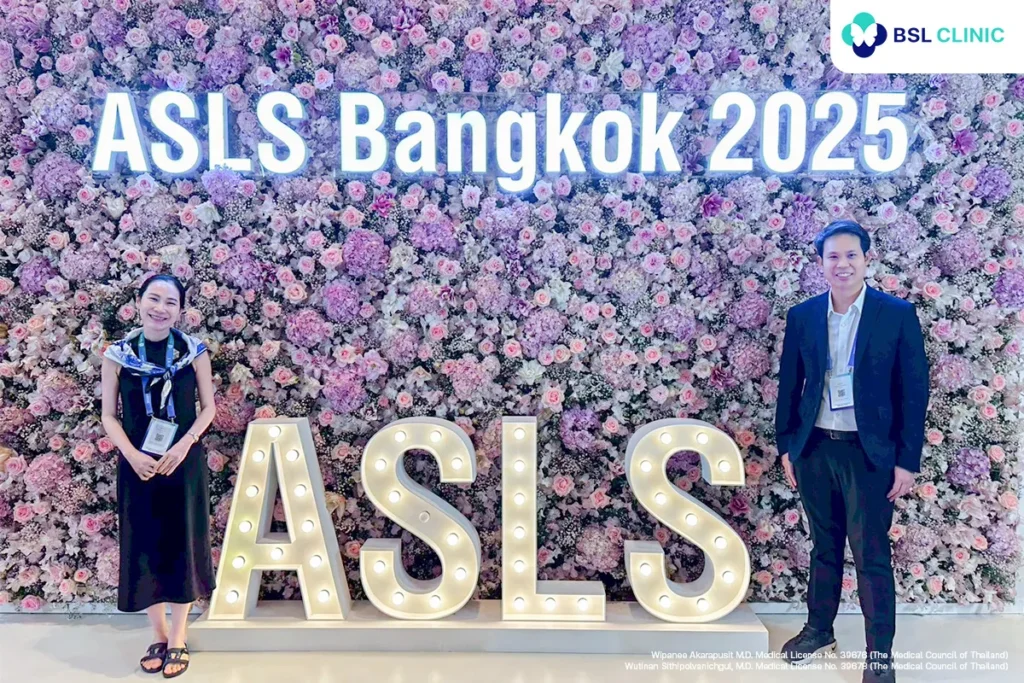
ASLS Bangkok 2025
ASLS Bangkok 2025

How can we keep the skin looking younger as we age?

The next step in skin care — updating beauty trends for better treatment outcomes.
Dr. Wipanee and Dr. Wutthinan, representing BSL, attended ASLS Bangkok 2025 to bring back knowledge and design treatment approaches that help improve skin health as we age — when the skin becomes thinner, drier, uneven in tone, slower to recover, and more prone to wrinkles.

At BSL, we design skin rejuvenation approaches to strengthen the skin, restore moisture, and maintain a youthful appearance, helping you achieve healthier skin with confidence.

Bangkok, Thailand
Wutinan Sithipolvanichgul, M.D. Medical License No. 39678 | Wipanee Akarapusit, M.D. Medical License No. 39676
Wipanee Akarapusit, M.D. Medical License No. 39676
Wutinan Sithipolvanichgul, M.D. Medical License No. 39678
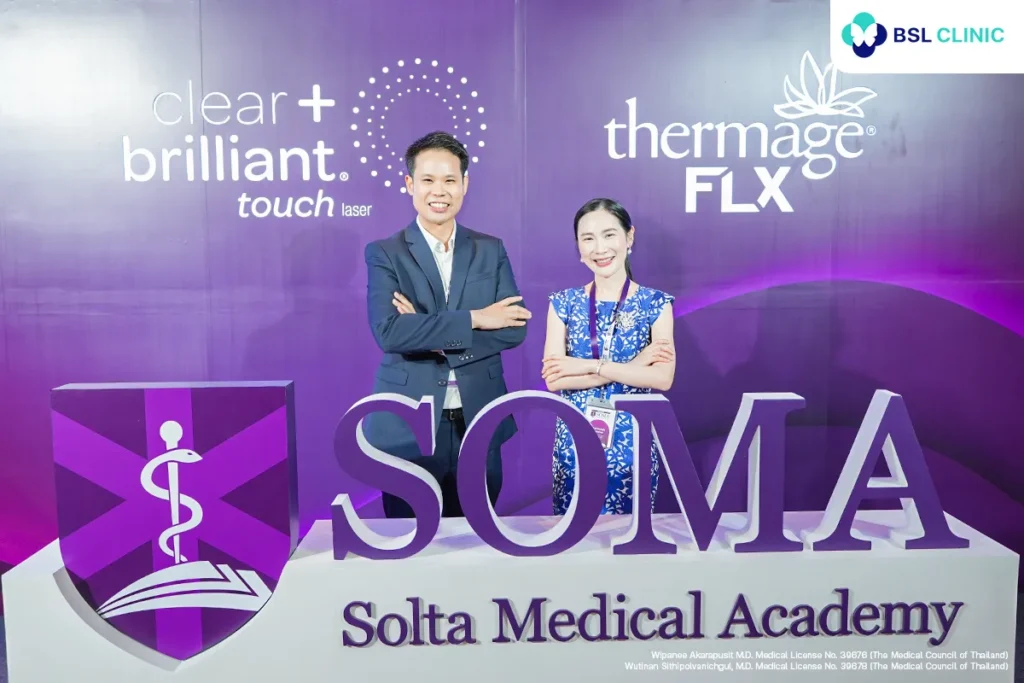
SOMA Bangkok 2025 | Solta Medical Academy

BSL Clinic Participates in Academic Conference Presentation

A stage that brings together dermatology and aesthetic medicine practitioners from various countries to exchange knowledge and experiences in skin care.
Dr. Wipanee Akkaraphusit (Medical License No. 39676) joined as a speaker, presenting on topics that reflect real experiences in patient care, while sharing holistic treatment approaches that emphasize “personalized understanding,” one of the key principles of modern aesthetic medicine.

The Athenee Hotel, Thailand
Wutinan Sithipolvanichgul, M.D. Medical License No. 39678 | Wipanee Akarapusit, M.D. Medical License No. 39676
Wipanee Akarapusit, M.D. Medical License No. 39676
Wutinan Sithipolvanichgul, M.D. Medical License No. 39678
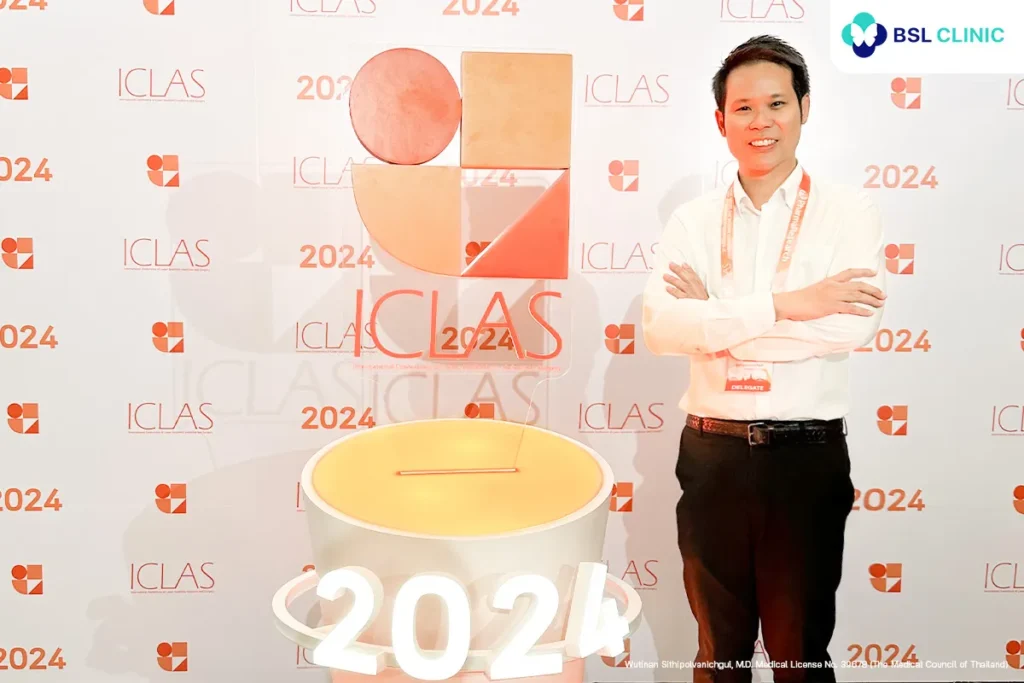
International Conference

BSL doctors joined to update treatment methods for acne scars, melasma, freckles, skin tightening, filler programs and laser technology at the 3rd International Conference of Laser, Aesthetic Medicine and Surgery (ICLAS) in order to develop new knowledge and various treatment techniques to achieve results that are suitable for each patient.

Bangkok, Thailand
Wutinan Sithipolvanichgul, M.D. Medical License No. 39678
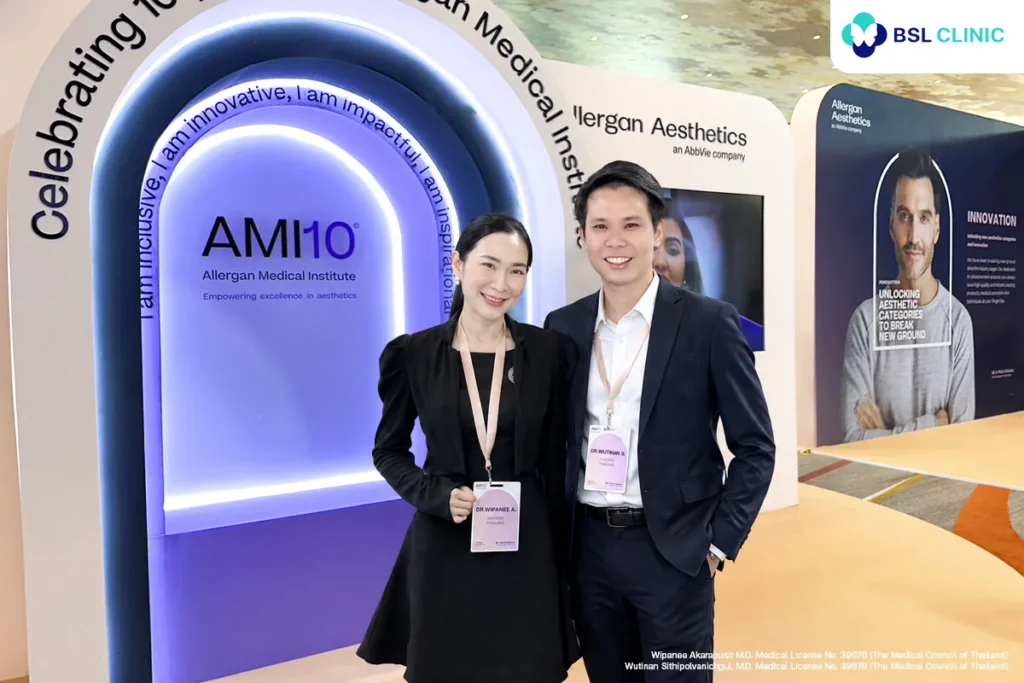
Allergan Medical Institute the 10 Years Anniversary

BSL Clinic participated in the Allergan Medical Institute 10 Years Anniversary event held at ICONSIAM, Thailand. The event served as a platform for exchanging perspectives on filler injection programs, along with updates on aesthetic directions in the Asia-Pacific region. This was a space where doctors from many countries came together to share knowledge and practical techniques, enabling interested individuals to understand approaches to wrinkle care, deep lines, and facial contouring, in ways suitable for each person.
Bangkok, Thailand
Wutinan Sithipolvanichgul, M.D. Medical License No. 39678 | Wipanee Akarapusit, M.D. Medical License No. 39676
Wipanee Akarapusit, M.D. Medical License No. 39676
Wutinan Sithipolvanichgul, M.D. Medical License No. 39678
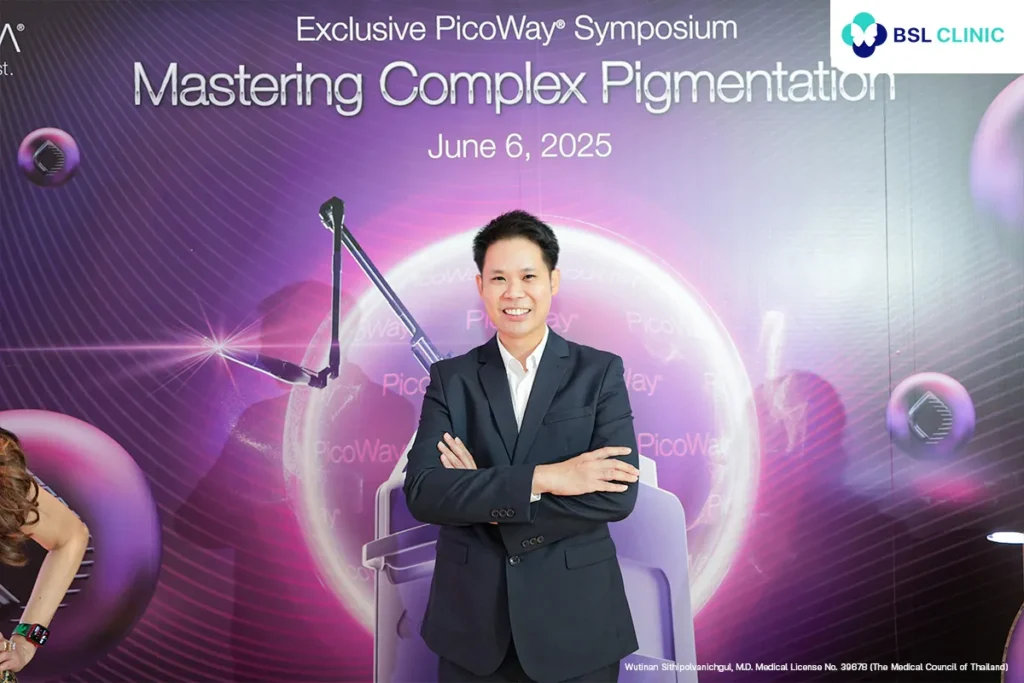
Exclusive PicoWay® Symposium: Mastering Complex Pigmentation

BSL Clinic had the honor to attend the Exclusive PicoWay® Symposium: Mastering Complex Pigmentation, with Dr. Wutthinan Sithipolvanichgul (Medical Council No. 39678) updating knowledge on the PicoWay® Program and approaches to managing skin pigmentation issues such as melasma, freckles, and uneven skin tone, while exchanging perspectives with doctors from various countries to find approaches suitable for each individual.

Bangkok, Thailand
Wutinan Sithipolvanichgul, M.D. Medical License No. 39678
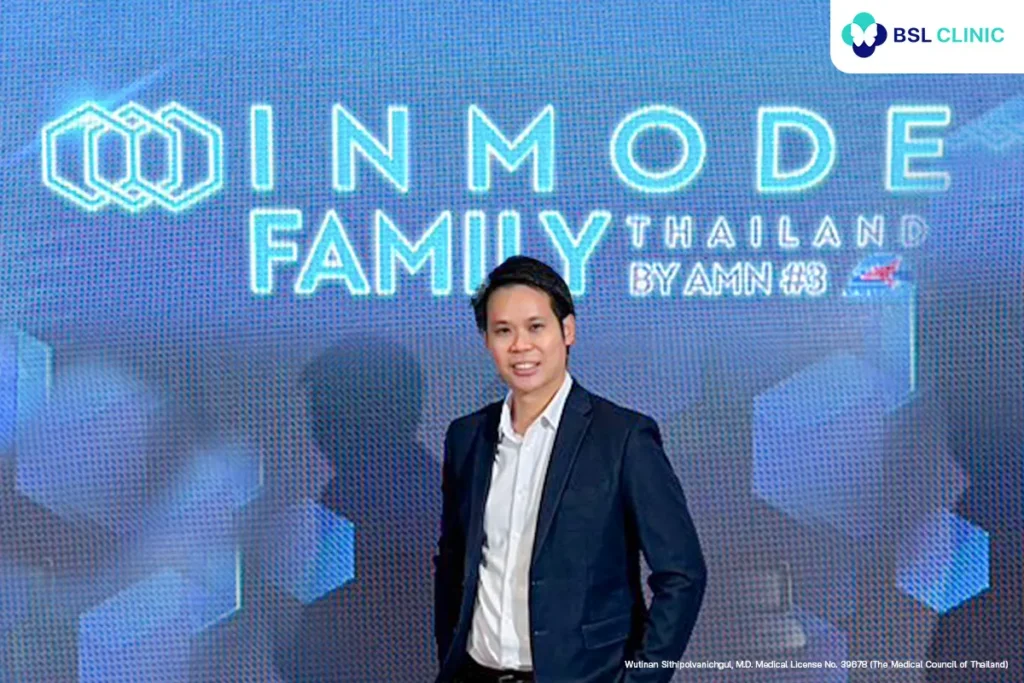
InMode Family Thailand by AMN, the 3rd time

Dr. Wutthinan participated in the InMode Family Thailand by AMN, the 3rd time. This event was an opportunity to exchange knowledge on the use of the Morpheus8 program, which is one of the options for skin care using radiofrequency energy. BSL Clinic applies this program to address facial contouring and wrinkles, with doctors designing treatments suitable for each individual’s skin condition.

Bangkok, Thailand
Wutinan Sithipolvanichgul, M.D. Medical License No. 39678
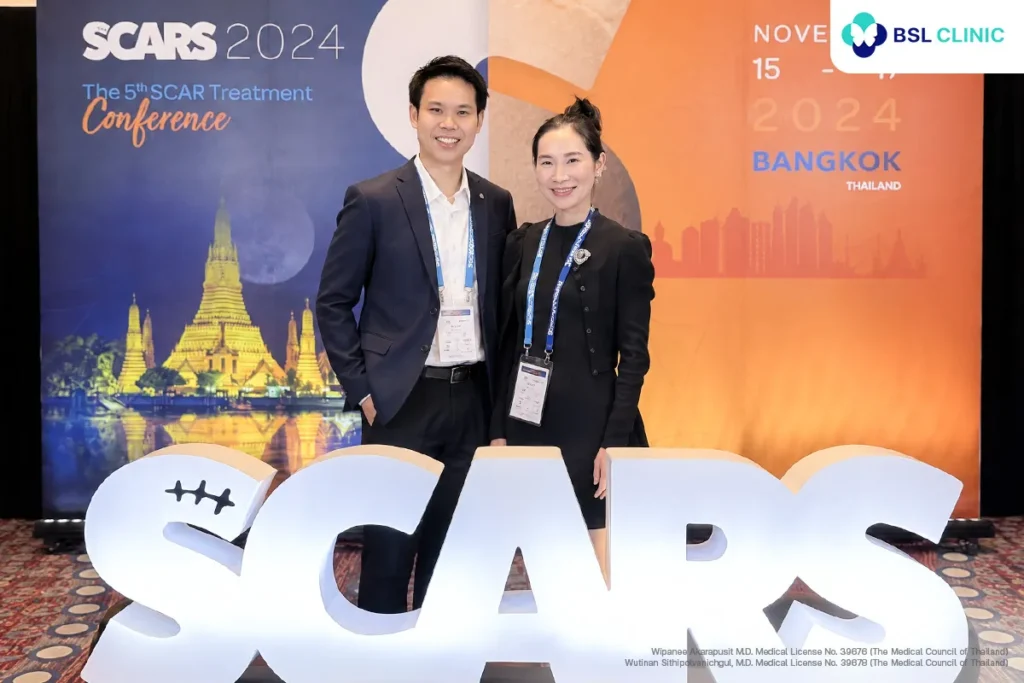
The 5th SCAR Treatment Conference 2024

Doctors from BSL Clinic participated in the 5th SCAR Treatment Conference 2024, a platform for exchanging knowledge on scar care. The conference featured presentations of laboratory research data along with updates on laser technology and current treatment approaches, as well as the integration of various treatment methods for appropriate patient care.

Bangkok, Thailand
Wutinan Sithipolvanichgul, M.D. Medical License No. 39678 | Wipanee Akarapusit, M.D. Medical License No. 39676
Wipanee Akarapusit, M.D. Medical License No. 39676
Wutinan Sithipolvanichgul, M.D. Medical License No. 39678
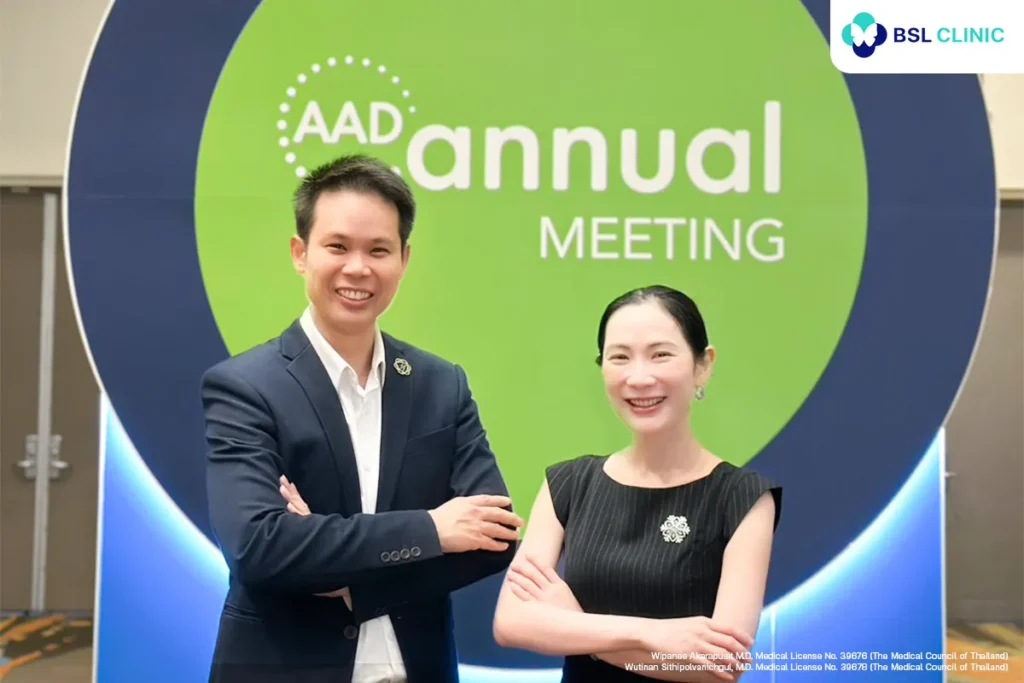
American Academy of Dermatology Annual Meeting 2025

To develop approaches in skin care tailored to individual causes, laser technology that has been studied and applied in many countries is now available at BSL Clinic.

United States of America
Wutinan Sithipolvanichgul, M.D. Medical License No. 39678 | Wipanee Akarapusit, M.D. Medical License No. 39676
Wipanee Akarapusit, M.D. Medical License No. 39676
Wutinan Sithipolvanichgul, M.D. Medical License No. 39678
Updating knowledge on laser treatment for melasma

At the conference, the Laser Toning technique (PTP mode, 1,064 nm Q-Switched Nd:YAG) was presented, referencing a study published in the Journal of Cosmetic and Laser Therapy. It was found that this type of laser has been applied in managing pigmentation related to melasma, with reports of skin characteristic changes in treated patients¹. These studies provide the medical team with scientific information to support care planning, considering the causes and suitability for each individual.

Bangkok, Thailand
Wutinan Sithipolvanichgul, M.D. Medical License No. 39678
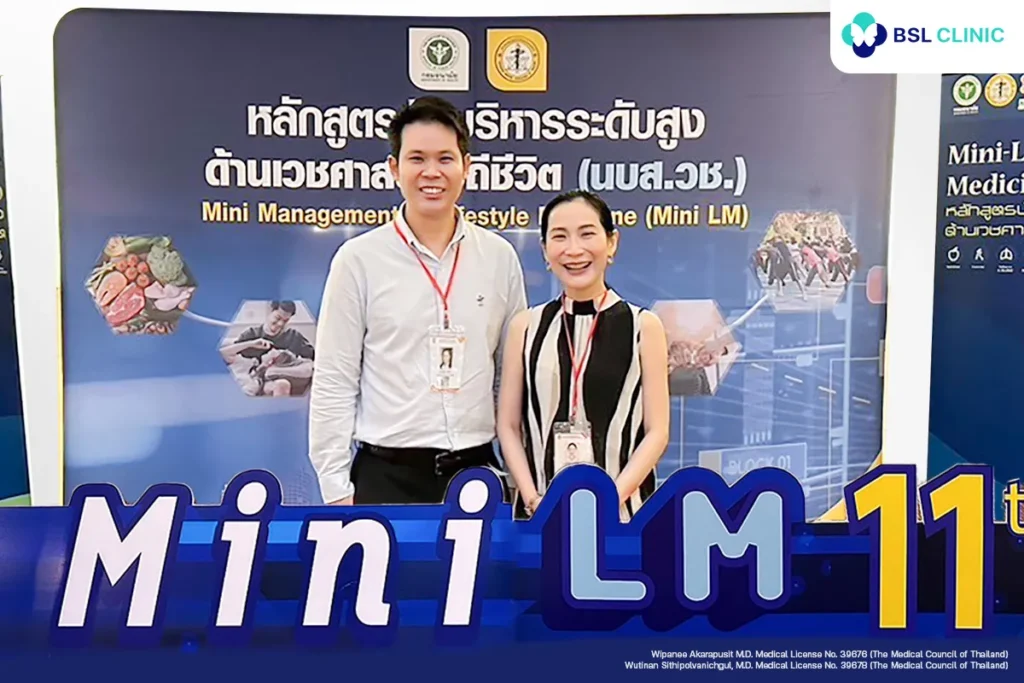
BSL Clinic doctor participated in the Mini Management in Lifestyle Medicine (Mini LM) Executive Program, Class 11

This learning covers knowledge in health promotion, disease prevention, and chronic condition management, with a focus on holistic health care from the level of genes, environment, and lifestyle behaviors. BSL doctors will apply the knowledge gained to consider and plan appropriate health and skin care for each individual client.

Bangkok, Thailand
Wutinan Sithipolvanichgul, M.D. Medical License No. 39678 | Wipanee Akarapusit, M.D. Medical License No. 39676
Wipanee Akarapusit, M.D. Medical License No. 39676
Wutinan Sithipolvanichgul, M.D. Medical License No. 39678
At BSL Clinic, we place importance on caring for our clients at every step

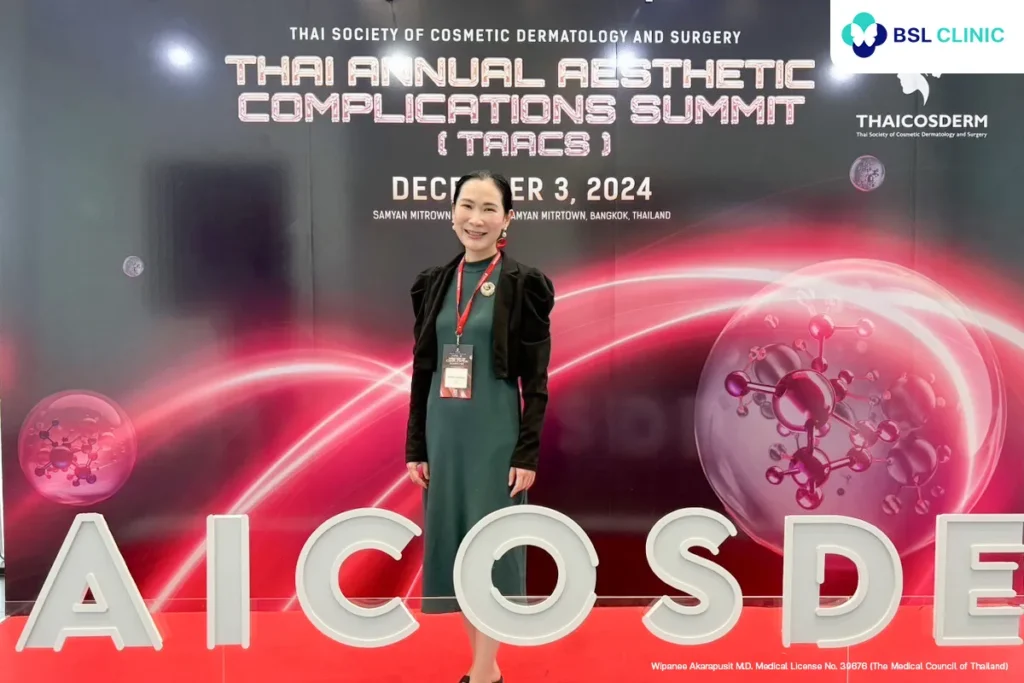
Doctors participated in a national academic conference to exchange knowledge in the treatment of dermatological and aesthetic issues. This conference emphasized methods of care, prevention, and the management of possible complications from treatments, enabling doctors to apply the information in planning care appropriate for each individual.

Bangkok, Thailand
Wipanee Akarapusit, M.D. Medical License No. 39676
Wutinan Sithipolvanichgul, M.D. Medical License No. 39678

Wutinan Sithipolvanichgul M.D.

Medical License No. 39678 BSL Clinic, Bangkok

    1. American Academy of Dermatology Association. Acne scars: Diagnosis and treatment [Internet]. Schaumburg (IL): American Academy of Dermatology Association; [cited 2026 Aug 5]. Available from: https://www.aad.org/public/diseases/acne/derm-treat/scars
    2. Fabbrocini G, Annunziata MC, D’Arco V, De Vita V, Lodi G, Mauriello MC, et al. Acne scars: Pathogenesis, classification and treatment. Dermatol Res Pract. 2010;2010:893080. Available from: https://pmc.ncbi.nlm.nih.gov/articles/PMC2958495/
    3. American Academy of Dermatology Association. Acne scars: Treatment [Internet]. Schaumburg (IL): American Academy of Dermatology Association; [cited 2026 Aug 5]. Available from: https://www.aad.org/public/diseases/acne/derm-treat/scars/treatment
    4. Tan JKL, Tang J, Fung K, Gupta AK, Thomas DR, Sapra S, et al. Acne scars: Pathogenesis, classification and treatment modalities. Clin Cosmet Investig Dermatol. 2020;13:339-48. Available from: https://pmc.ncbi.nlm.nih.gov/articles/PMC7394107/
    5. Zhang M, Liu C, Zhang S, Chu R, Ren X. Advances in the treatment of acne scars. Front Med (Lausanne). 2025;12:1643035. doi:10.3389/fmed.2025.1643035. Available from: https://pmc.ncbi.nlm.nih.gov/articles/PMC12425707/
icon tel icon enquiry icon line icon email
-->
icon email